

What's Happening?
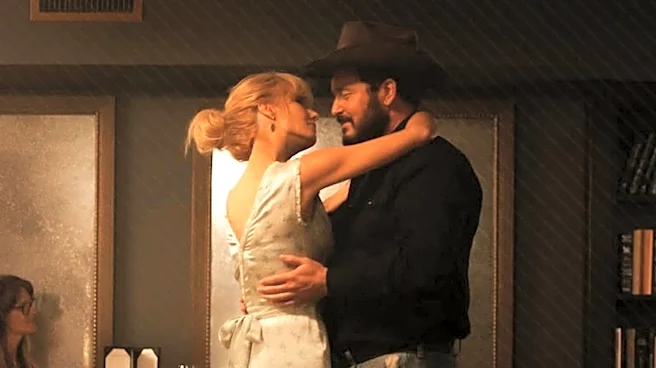
Taylor Sheridan, creator of the hit neo-Western drama 'Yellowstone,' along with 101 Studios, Paramount Global, and NBCUniversal, are facing a copyright infringement lawsuit. Writer Lauren J. Salkin alleges that Sheridan stole the idea for 'Yellowstone'
from her 2016 pitch for a TV series titled 'Sovereign Nation.' Salkin claims she spent over a decade developing 'Sovereign Nation,' which focused on tribal governance, casino-driven economic power, and land development conflicts. She submitted her pitch to Sheridan's representatives in late 2016 but received a rejection in February 2017, stating Sheridan was unavailable for TV projects. Months later, 'Yellowstone' was greenlit and premiered in June 2018. The lawsuit highlights numerous similarities between Salkin's rejected pitch and 'Yellowstone,' including casino-centered institutions organizing political power, unusual land-development mechanisms, parallel dramatic functions, and similar character roles. Salkin's lawyers also claim she suggested actors Danny Huston and Gil Birmingham for her project, both of whom were later cast in 'Yellowstone' in materially parallel roles.
Why It's Important?
This lawsuit carries significant implications for the entertainment industry, particularly concerning intellectual property rights and the process of pitching creative works. If Salkin's claims are substantiated, it could set a precedent for how studios and creators handle unsolicited or rejected pitches, potentially leading to increased scrutiny and more stringent protocols to prevent perceived idea theft. For writers and creators, it underscores the challenges of protecting original concepts in a competitive industry where ideas can be easily appropriated. For major studios like Paramount Global and NBCUniversal, a loss in this case could result in substantial financial damages and reputational harm, potentially impacting future collaborations and the development of new projects. The case also highlights the 'David-versus-Goliath' dynamic often seen in copyright disputes, where individual creators challenge powerful industry figures and corporations, making the outcome a point of interest for many aspiring and established artists.
What's Next?
Lauren J. Salkin is seeking damages and profits tied to the alleged copyright infringement, as well as injunctive relief to prevent future infringement. The legal proceedings will likely involve a detailed comparison of Salkin's 'Sovereign Nation' pitch materials and the 'Yellowstone' series to determine the extent of any similarities and whether they constitute copyright infringement. Representatives for Sheridan and the named companies have been contacted for comment, and their responses will be crucial as the case progresses. The lawsuit could lead to a lengthy court battle, a settlement, or a dismissal, depending on the evidence presented and the court's interpretation of copyright law. The outcome will be closely watched by the entertainment industry, as it could influence how creative ideas are protected and developed in the future, potentially leading to changes in industry practices for pitch submissions and project development.
Beyond the Headlines
Beyond the immediate legal and financial ramifications, this lawsuit touches upon deeper ethical and creative integrity issues within Hollywood. The accusation of idea theft can erode trust between creators and production companies, making it harder for new talent to break into the industry without fear of their work being exploited. It also raises questions about the originality of successful franchises and the extent to which popular narratives might be built upon uncredited contributions. The case could spark broader discussions about the need for greater transparency and accountability in the development process, potentially leading to calls for stronger protections for intellectual property and more equitable compensation for original ideas. The 'David-versus-Goliath' narrative invoked by Salkin's attorney highlights the power imbalance often present in such disputes, emphasizing the struggle for individual creators to assert their rights against well-resourced corporations and established figures.