





What's Happening?
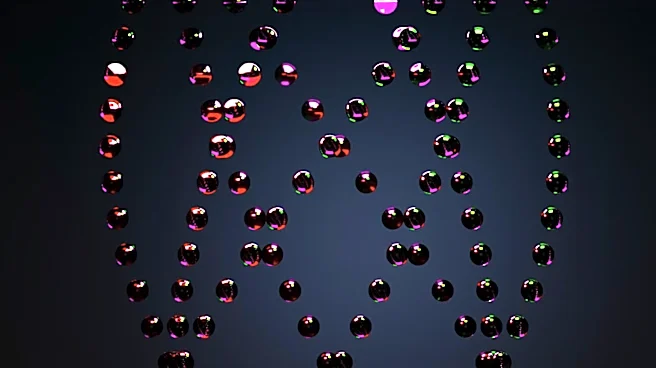
Anthropic, the company behind the AI model Claude, has announced the implementation of invisible watermarks on text generated by its models launched on or after August 2. This move is in response to the EU AI Act, which mandates that AI-generated outputs
must be detectable to avoid fines. The watermarks are designed to be statistically observable without altering the meaning, quality, or readability of the text. Additionally, images generated by Claude will include metadata with a digital signature. The watermarks aim to help identify AI-generated content, although they can be removed or altered, raising questions about their effectiveness in preventing misuse.
Why It's Important?
The introduction of watermarks by Anthropic is significant as it addresses growing concerns about the misuse of AI in generating fake or low-quality content, often referred to as 'AI slop.' This development is crucial for maintaining academic integrity and ensuring transparency in AI-generated outputs. The ability to detect AI-generated content could help institutions enforce policies against unauthorized AI use, as demonstrated by the International Conference on Machine Learning's recent enforcement of a 'no AI' policy. However, the ease with which watermarks can be stripped poses challenges, highlighting the need for robust detection tools to prevent misuse.
What's Next?
As Anthropic rolls out these watermarks globally, the effectiveness of this measure will likely be scrutinized by academic and regulatory bodies. The company plans to provide tools for detecting these watermarks, which could aid in enforcing policies against unauthorized AI use. However, the potential for watermarks to be removed or altered means that ongoing development of detection technologies will be necessary. The broader AI community may also need to consider additional measures to ensure the responsible use of AI-generated content.
Beyond the Headlines
The implementation of watermarks raises ethical and legal questions about the balance between innovation and regulation in AI technology. While watermarks could deter some misuse, they also highlight the limitations of current regulatory approaches in fully addressing the challenges posed by AI. The ongoing evolution of AI technologies will require continuous adaptation of policies and detection methods to safeguard against misuse while fostering innovation.