



What's Happening?
George McCaskey, chairman of the Chicago Bears, has consistently stated the team's intention to relocate to Indiana for the construction of a new stadium. He has highlighted the proactive and solution-oriented approach of Indiana officials in these discussions.
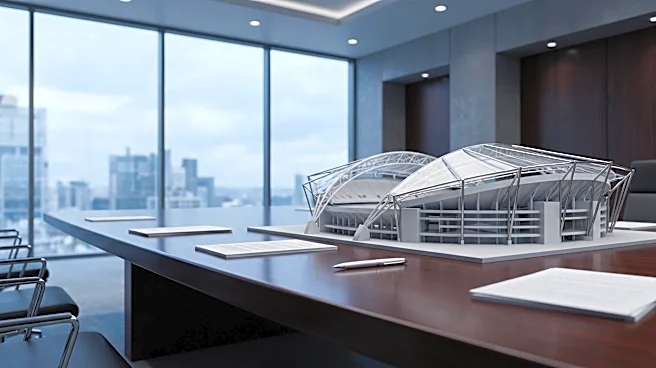
Despite these public declarations, the future of the Bears remains a subject of debate and uncertainty, as McCaskey has also indicated an openness to further discussions with Illinois lawmakers. The Bears' commitment to Indiana has been met with skepticism, particularly as the team has yet to take concrete actions or establish a definitive start date for the proposed project. This ongoing situation follows years of the Bears seeking public funding for a new stadium, with previous threats to move to suburban Arlington Heights also failing to materialize into construction. The team has committed $2 billion to a new stadium project but has requested at least $855 million in public funding and tax breaks.
Why It's Important?
The Chicago Bears' stadium saga carries significant implications for both Illinois and Indiana, particularly concerning public funding and regional economic development. Illinois lawmakers have shown reluctance to provide the requested public funding, largely due to taxpayers still being responsible for over $414 million from the previous Soldier Field renovation 25 years ago. This financial burden makes public sentiment and political will in Illinois lean heavily against further subsidies for a privately owned team. Conversely, Indiana lawmakers have been actively pursuing the Bears, offering substantial public subsidies, reportedly over $1 billion, to attract the team across state lines. This competition for a major sports franchise highlights the economic impact and prestige associated with hosting an NFL team, including potential job creation, increased tourism, and local business revenue. The outcome will determine which state benefits from the significant economic activity generated by a new, modern NFL stadium and associated developments.
What's Next?
The immediate future involves continued negotiations and potential legislative action in both Illinois and Indiana. NFL Commissioner Roger Goodell has met with Illinois lawmakers, indicating that Illinois still has an opportunity to present a viable proposal to keep the Bears. Goodell emphasized that there is no specific timetable for a decision, suggesting that the Bears are likely to continue evaluating offers from both states. Illinois lawmakers are expected to return for their fall veto session in late November, which could be the earliest opportunity for any legislative movement on a stadium deal. However, Governor J.B. Pritzker has stated that the onus is on the Bears to draft legislative language that can pass both chambers. If Illinois fails to present a compelling offer, the Bears may solidify their plans for Hammond, Indiana, though the lack of a definitive start date or concrete actions in Indiana suggests the team is still leveraging its options.
Beyond the Headlines
This ongoing stadium dispute transcends typical business negotiations, touching upon deeper issues of public finance, civic identity, and the role of professional sports franchises in urban development. The reluctance of Illinois to provide public funding reflects a growing national debate about the use of taxpayer money for private sports facilities, especially when existing public debt from previous projects remains. The 'Taj Mahals of the NFL' comparison for modern stadiums highlights the escalating demands for state-of-the-art facilities, often at public expense. The potential relocation of a historic franchise like the Chicago Bears, which has been a part of the city's identity for decades, could have significant cultural and emotional repercussions for fans and the community. This situation also underscores the power dynamics between professional sports leagues, team owners, and state governments, where the threat of relocation is a potent tool for securing public subsidies, raising ethical questions about corporate welfare and responsible governance.