




What's Happening?
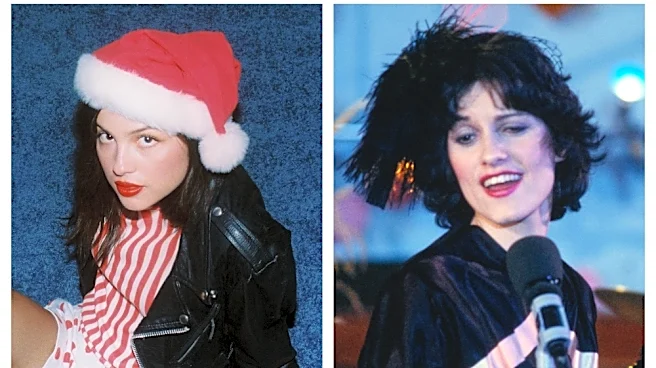
Olivia Rodrigo's recently released festive single, 'Take Me Home (4 Christmas),' has garnered attention and praise, particularly from Christopher Butler, the songwriter of The Waitresses' 1981 track 'Christmas Wrapping.' Butler publicly acknowledged similarities
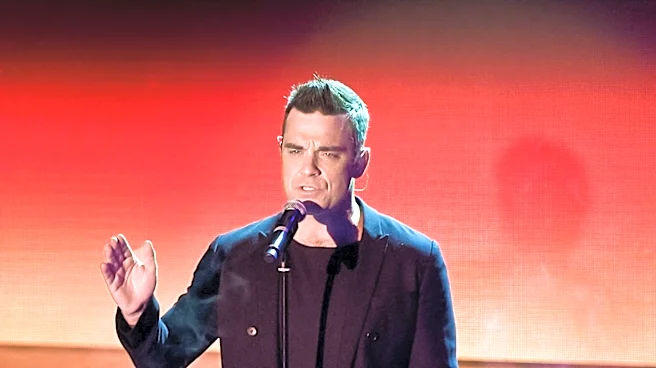
between the two songs but clarified that he views Rodrigo's work as an 'homage' rather than plagiarism. He revealed that Rodrigo had reached out to him prior to the song's release, inviting him to listen to it. Butler, initially skeptical, later praised her songwriting and predicted the song's success. The track, which features a music video with Cynthia Nixon and Ben Marshall, has also drawn comparisons to Robbie Williams' song 'Candy,' prompting Williams to comment on the broader issue of plagiarism accusations in the music industry. He expressed his support for Rodrigo, emphasizing that accidental musical echoes are common and that excessive scrutiny can stifle creativity.
Why It's Important?
This development highlights a recurring debate within the music industry regarding originality, inspiration, and intellectual property. The positive reception from an established songwriter like Christopher Butler, who explicitly states 'no plagiarism,' could set a precedent for how artists and the public perceive musical similarities. It underscores the fine line between homage and infringement, a distinction that often leads to legal disputes and public scrutiny. For emerging artists like Olivia Rodrigo, receiving such an endorsement can mitigate potential controversies and reinforce her artistic credibility. Conversely, the discussion initiated by Robbie Williams about the 'ambulance chasing' nature of some plagiarism claims brings to light the pressures artists face and the potential chilling effect on creative expression if every perceived similarity is met with accusations. This situation could influence future discussions and legal interpretations of copyright in music, potentially encouraging a more nuanced understanding of artistic influence.
What's Next?
The positive reception from Christopher Butler and the supportive stance from Robbie Williams are likely to bolster the commercial and critical success of Olivia Rodrigo's 'Take Me Home (4 Christmas).' The song is positioned to be a strong contender in the competitive festive music market, particularly in the UK's annual Christmas #1 contest. This incident may also encourage more open dialogue within the music industry about the creative process, the role of influence, and the appropriate response to musical similarities. It could lead to a greater emphasis on collaboration and acknowledgment of inspiration rather than immediate accusations of plagiarism. For Rodrigo, this positive reinforcement from established artists could further solidify her reputation as a talented songwriter and artist, potentially influencing her future creative choices and collaborations.
Beyond the Headlines
Beyond the immediate success of Rodrigo's single, this event touches upon deeper ethical and cultural dimensions within the arts. It raises questions about the nature of creativity itself: how much of it is truly novel, and how much is a reinterpretation or evolution of existing forms? The discussion initiated by Williams about the 'frightening' of creativity due to constant accusations of plagiarism points to a potential long-term shift in artistic production. If artists become overly cautious to avoid any perceived similarity, it could lead to a homogenization of music or a reluctance to draw inspiration from the rich history of musical forms. This situation also highlights the power of social media and public opinion in shaping these debates, as comparisons often emerge online before official statements are made. The outcome of such discussions can influence how future generations of artists approach their craft and how intellectual property laws are applied in an increasingly interconnected and referential creative landscape.