






What's Happening?
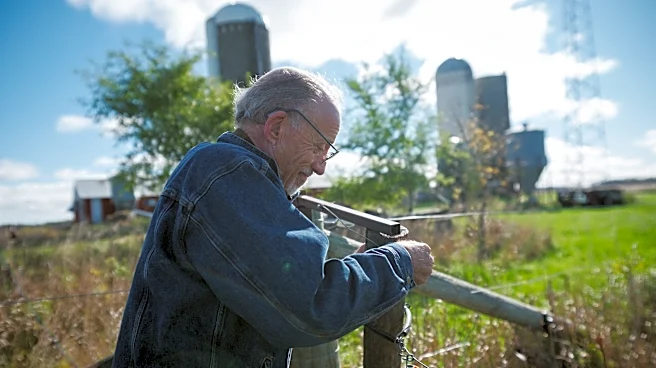
Eric and Ann Franzenburg, farmers in Belle Plaine, Iowa, have successfully completed their first harvest of Pacific white shrimp from indoor tanks. This venture is part of a partnership with Midland Co., a central Iowa company founded by Jackson Kimle
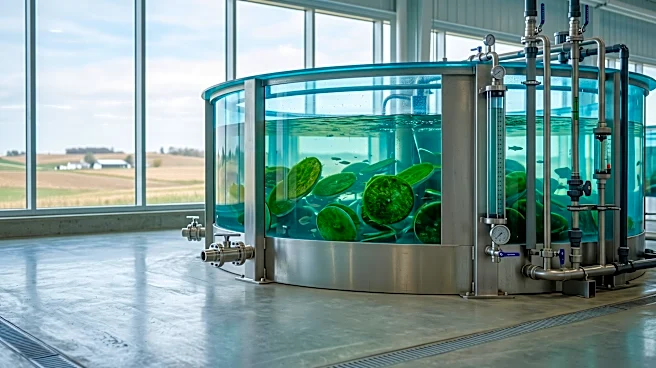
and Matthew Ellis in 2018. Midland Co. specializes in fabricating turn-key shrimp systems and training farmers to operate them. The Franzenburgs, who have a diverse farming background including hogs, corn, soybeans, and sunflowers, sought a high-value offering to attract more visitors to their farm store. Midland Co.'s innovative system uses discs to grow algae, which shrimp consume, as opposed to traditional methods that use bacteria to convert ammonia into nitrates. This approach creates a more efficient and symbiotic treatment within the system, preventing nitrate buildup and reusing nutrients effectively. The young shrimp, in their post-larval stage, are flown in from Minnesota Shrimp LLC and grow from less than a gram to about 25 grams in approximately 100 days, reaching 4 to 6 inches in length.
Why It's Important?
This development signifies a notable shift in U.S. agriculture, particularly in landlocked states like Iowa, by introducing a new, high-quality seafood product to the Midwest market. The ability to farm Pacific white shrimp indoors addresses the challenge of providing fresh seafood in regions far from coastal areas, reducing reliance on imported or previously frozen options. For consumers, this means access to fresher, locally-sourced shrimp. For farmers, it represents a diversification opportunity and a potential new revenue stream, especially for those seeking to add higher-value products to their operations. The innovative water cleaning system employed by Midland Co. also highlights advancements in sustainable aquaculture, offering a more environmentally friendly approach to shrimp farming by efficiently reusing nutrients and minimizing waste. This model could inspire similar ventures across the U.S., contributing to food security and local economies.
What's Next?
The Franzenburgs anticipate harvesting approximately 7,000 pounds of shrimp annually, with about seven harvests yielding close to 1,000 pounds each. They plan a two-pronged marketing approach: direct-to-consumer sales at their farm, primarily through online pre-orders for specific pickup dates, and selling under the Midland Co. label, which will be frozen. Midland Co. has already installed systems on six other farms, mostly in Iowa, with one in Minnesota and another in New Hampshire, indicating a potential for expansion. The success of these initial farms could lead to broader adoption of Midland Co.'s system, further establishing inland shrimp farming as a viable agricultural sector in the U.S. Farmers considering this venture are advised to be curious, hardworking, and observant, as the process requires meticulous monitoring of water parameters.
Beyond the Headlines
The emergence of indoor shrimp farming in the Midwest represents a fascinating intersection of agricultural innovation, economic diversification, and environmental sustainability. It challenges traditional notions of where and how food can be produced, potentially reshaping regional food systems. This model could reduce the carbon footprint associated with transporting seafood long distances and offer a more controlled environment for aquaculture, less susceptible to external environmental fluctuations or diseases prevalent in open-water farming. Furthermore, the emphasis on local production and direct-to-consumer sales fosters a stronger connection between producers and consumers, promoting transparency and community engagement. This trend could also stimulate research and development in recirculating aquaculture systems (RAS) and other controlled environment agriculture (CEA) technologies, driving further innovation in sustainable food production across the nation.