







What's Happening?
Doug Herrington, CEO of Worldwide Amazon Stores, has announced Amazon's extensive 12-day Black Friday Week and Cyber Monday event. This promotional period, running from November 19 to November 30, will feature millions of deals, themed promotions, and enhanced
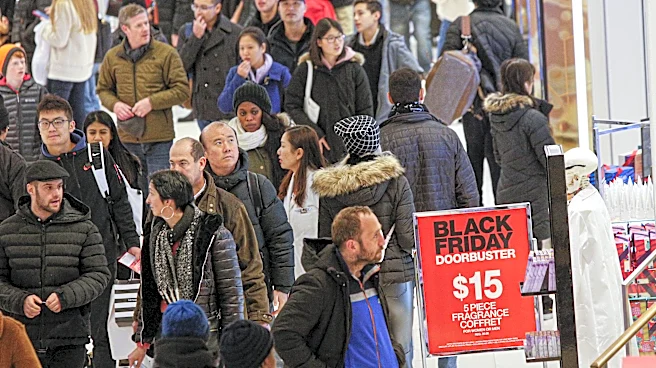
shopping tools. Herrington emphasized Amazon's daily commitment to offering low prices and a wide selection, stating that the event will further amplify this by providing thousands of deals on popular gift items. This initiative positions Amazon as a major participant in the traditional holiday shopping frenzy, contrasting with a smaller group of retailers that are opting out of conventional Black Friday sales to promote alternative values like outdoor activity, blood donation, or environmental causes. The National Retail Federation anticipates 183 million consumers will shop over Thanksgiving weekend, highlighting the continued significance of Black Friday for both retailers and shoppers.
Why It's Important?
Amazon's aggressive 12-day Black Friday and Cyber Monday event is significant for the U.S. retail landscape as it sets a competitive benchmark for holiday sales. By extending the sales period, Amazon aims to capture a larger share of consumer spending during one of the most crucial shopping seasons of the year. This strategy could pressure other retailers to offer prolonged discounts or risk losing market share. For consumers, it means a longer window to access deals, potentially spreading out holiday shopping and reducing the intensity of single-day sales events. The emphasis on 'thousands of deals on the most-loved gifts' suggests a focus on high-demand products, which could drive significant sales volume for brands featured on the platform. This move reinforces Amazon's dominant position in e-commerce and its influence on consumer purchasing habits during the holidays.
What's Next?
Following Amazon's announcement, other major U.S. retailers are likely to adjust their holiday sales strategies to compete with the extended Black Friday and Cyber Monday event. Consumers can expect a prolonged period of promotional offers across various retail channels, both online and in brick-and-mortar stores. The extended sales window may lead to a more distributed shopping pattern throughout late November, potentially reducing the traditional single-day rush but maintaining high sales volumes over a longer duration. Retailers will closely monitor Amazon's performance and consumer response to these extended deals to inform future holiday season planning. The focus will shift to how effectively Amazon can maintain consumer engagement and sales momentum over the entire 12-day period, setting a precedent for future holiday shopping seasons.
Beyond the Headlines
Amazon's extended Black Friday and Cyber Monday event reflects a broader evolution in holiday retail strategies, moving away from a singular day of intense sales to a more prolonged promotional period. This shift could have long-term implications for consumer behavior, potentially normalizing extended discount periods and altering perceptions of 'doorbuster' deals. It also highlights the growing divergence in retail philosophies, with some brands like REI and Patagonia actively disengaging from traditional Black Friday consumerism to promote brand values. This contrast underscores a cultural debate within the retail sector about the true purpose of holiday sales—whether it's solely about maximizing revenue or also an opportunity to reinforce brand identity and social responsibility. Amazon's approach, while focused on sales, will undoubtedly influence how consumers perceive value and urgency during the holiday shopping season.