



What's Happening?
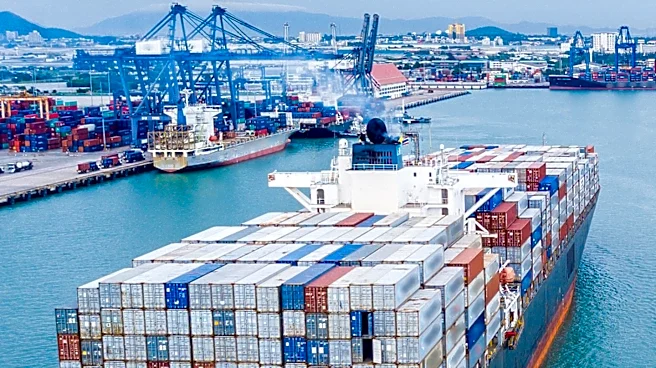
New research from Arizona State University indicates that the global supply network is evolving to become more resilient through regionalization rather than continuous growth. This shift involves breaking down the highly connected global system into smaller,
more flexible regional networks. Businesses are increasingly sourcing materials closer to home, which helps mitigate risks such as production delays and other disruptions affecting manufacturing and shipping. This modularization trend, observed to have accelerated since 2016 and particularly during the pandemic, suggests that while globalization continues, the manner in which trade occurs is changing. Shipments to distant ports have decreased significantly, with more goods being transported within regions, even if still crossing international borders. This adaptation is seen as a 'self-healing' mechanism for the global supply chain, aiming to ensure essential resources like food, medicine, and technology remain accessible during crises.
Why It's Important?
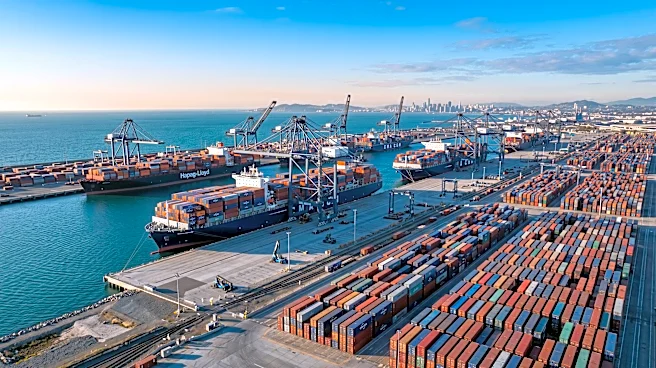
The move towards regionalized supply chains has significant implications for global trade and economic stability. By reducing reliance on single, extensive global networks, the system becomes less vulnerable to widespread disruptions caused by pandemics, natural disasters, or geopolitical conflicts. This enhanced resilience is crucial for protecting public health, human safety, and economic stability, as it helps prevent shortages, inflation spikes, and profit losses that can arise from supply chain failures. For businesses, regionalization means potentially lower risks of operational interruptions and more stable access to necessary inputs. For consumers, it could translate to more consistent availability of goods and potentially more stable prices, as local sourcing reduces exposure to international volatility. The shift also highlights the importance of strategic infrastructure investments and regional trade agreements that align with these evolving shipping patterns, particularly in supporting intra-cluster ports and trade routes.
What's Next?
The trend of regionalization is expected to continue, with ongoing adjustments in global trade patterns. Policymakers and businesses will likely focus on identifying and investing in infrastructure that supports these regional networks, such as expanding intra-cluster ports and improving local logistics. The integration of advanced technologies like Artificial Intelligence (AI) is anticipated to play a crucial role in enhancing forecasting capabilities, allowing companies to better predict trends and adapt to potential disruptions. While AI cannot prevent all issues, it can provide more accurate short- and long-term projections, enabling more agile supply chain management. Stakeholders will need to continue developing robust contingency plans, investing in climate-resilient practices, and adopting sophisticated risk management strategies to navigate the evolving landscape of global supply chains.
Beyond the Headlines
The regionalization of global supply chains represents a fundamental re-evaluation of efficiency versus resilience. Historically, globalization prioritized cost-effectiveness through extensive, interconnected networks. However, recent global events have exposed the fragility of this model, prompting a strategic pivot towards robustness. This shift could lead to a re-shoring or near-shoring of manufacturing and sourcing, potentially impacting labor markets and industrial development in various regions. Ethically, it underscores a growing recognition of the need for equitable access to essential goods, particularly in times of crisis, moving beyond purely economic considerations. Culturally, it might foster stronger regional economic blocs and collaborations, potentially altering geopolitical dynamics as countries prioritize regional trade partnerships. The long-term implications could include a more decentralized global economy, where localized production and consumption gain prominence, leading to a more stable yet potentially less globally integrated economic system.