




What's Happening?
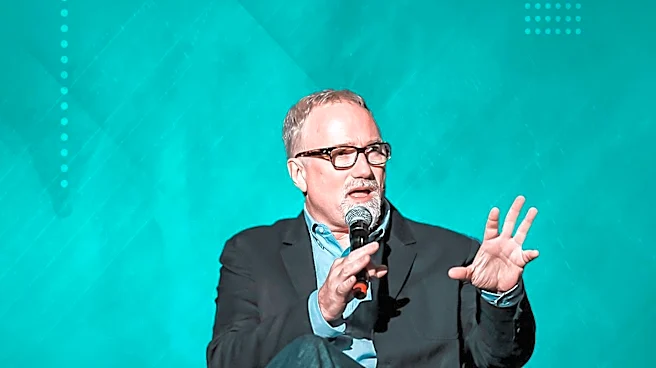
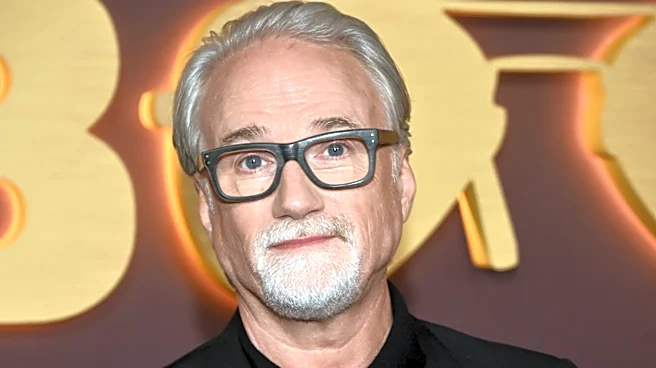
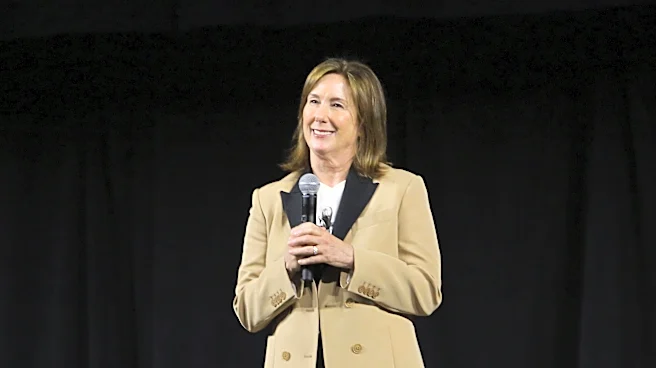
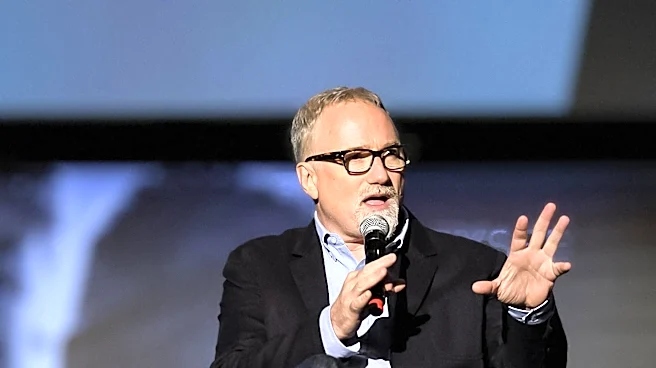
Filmmaker David Fincher revealed he pitched a unique Star Wars movie concept to Kathleen Kennedy at Lucasfilm prior to Disney's 2012 acquisition. Fincher, known for films like 'Fight Club' and 'Gone Girl,' envisioned a story exploring the Skywalker Saga
through the perspective of droids C-3PO and R2-D2. His interest lay in portraying them as 'essentially slaves who would bear witness to the folly of man,' observing themes of slavery, political corruption, and human irrationality. Fincher was particularly fascinated by how artificial intelligence would process the actions of the Jedi, Sith, and the political forces driving galactic conflicts. He saw C-3PO as a living historical record, offering a different lens through which to understand the Galactic Civil War. This pitch occurred before Disney's $4 billion acquisition of Lucasfilm, which ultimately led to a different creative direction for the franchise.
Why It's Important?
This revelation highlights a significant 'what if' moment in the Star Wars franchise's history, showcasing a potential path for creative storytelling that diverged from what eventually materialized under Disney. Fincher's concept represents a more existential and unconventional approach, focusing on deeper philosophical themes through the eyes of non-human characters. This contrasts with the more nostalgia-driven and commercially focused projects that have often characterized the franchise post-acquisition. The rejection or non-pursuit of such a vision underscores the tension between artistic ambition and corporate strategy in major Hollywood franchises. It also reflects on Lucasfilm's struggle to find a consistent creative direction since the Disney takeover, as noted by the divisive sequel trilogy and abandoned anthology films. The disclosure offers insight into the types of projects considered and ultimately passed over, shaping the current landscape of the Star Wars universe.
What's Next?
While Fincher's specific pitch is unlikely to be revisited, the discussion around it may influence future creative decisions within Lucasfilm. The ongoing debate among fans and critics about the franchise's direction could be further fueled by the knowledge of such an unconventional, critically acclaimed director's vision. Lucasfilm is currently moving towards more 'crowd-pleasing theatrical projects,' such as 'Star Wars: Starfighter,' suggesting a continued focus on commercially viable, perhaps less experimental, narratives. However, the public's positive reception to Fincher's concept might encourage future creators within the Star Wars universe to explore more philosophical or character-driven stories, even if not directly adopting Fincher's original idea. The broader implication is a continued internal and external discussion about balancing creative risk with established franchise expectations.
Beyond the Headlines
Fincher's proposed Star Wars film touches upon deeper ethical and philosophical questions regarding artificial intelligence, sentience, and the role of observers in historical events. By framing C-3PO and R2-D2 as witnesses to 'the folly of man,' the concept would have explored themes of moral judgment and the processing of complex human conflicts by non-human entities. This approach could have offered a profound commentary on war, power, and societal collapse from an objective, detached perspective, moving beyond typical hero-villain narratives. It also highlights the missed opportunity for a major franchise to engage with more mature and thought-provoking science fiction themes, potentially elevating its artistic standing. The contrast between Fincher's vision and the eventual commercial path taken by Disney illustrates the ongoing challenge in Hollywood to balance artistic integrity with the demands of a global blockbuster franchise.