



What's Happening?
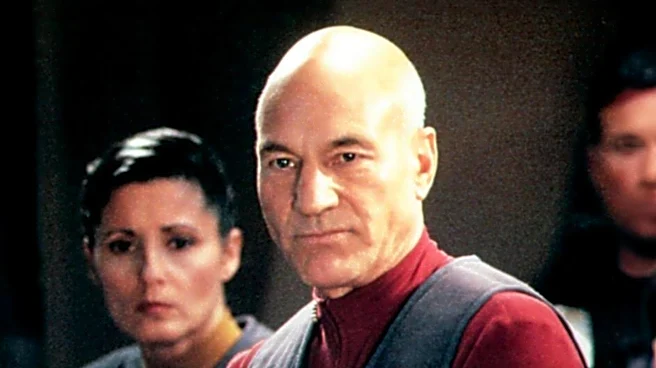
The 1991 Star Trek: The Next Generation episode, 'Night Terrors,' is widely cited for having some of the worst special effects in the franchise's history, specifically concerning scenes depicting Deanna Troi flying through space. The episode, which centers
on the Enterprise crew experiencing hallucinations due to a lack of REM sleep, featured ambitious flying sequences for Troi. Despite an entire day of second-unit production dedicated to these scenes, a rarity for the show, the outcome was heavily criticized by those involved. Writer/producer Jeri Taylor called the scenes a 'terrible' mistake, and effects coordinator Robert Legato deemed them 'horrible.' Even director Les Landau reportedly refused to discuss the episode, and actor Jonathan Frakes, who played Riker, described the flying scenes as 'a shitty piece of special effects work' that was 'below our standard.' Actress Marina Sirtis, who portrayed Deanna Troi, initially welcomed the action scenes but had to overcome an intense fear of heights while suspended in a flying harness for the production.
Why It's Important?
This particular instance highlights the challenges and limitations of special effects in television production during the early 1990s, even for a prominent science fiction series like Star Trek: The Next Generation. The widespread criticism from the show's own cast and crew underscores the impact that visual quality has on the overall perception and legacy of a production. For fans and critics, the quality of special effects can significantly influence the immersive experience and the believability of a fictional world. This example serves as a case study in how even well-intentioned and ambitious visual effects can fall short, potentially detracting from the narrative and the show's reputation. It also demonstrates the pressure on actors to perform demanding physical stunts, sometimes against personal fears, to achieve a desired visual outcome, even if the final product is not well-received.
What's Next?
While 'Night Terrors' aired decades ago, its legacy as an example of poor special effects continues to be discussed among Star Trek fans and in analyses of television production history. The Blu-ray restoration of Star Trek: The Next Generation has reportedly made these scenes appear even worse, further cementing their status as a notable misstep in the franchise's visual effects. For future productions, particularly in the science fiction genre, this serves as a cautionary tale regarding the importance of executing special effects with precision and ensuring they meet the expected quality standards. The ongoing discussion about these scenes also contributes to the broader conversation about the evolution of visual effects technology and its impact on storytelling in film and television.
Beyond the Headlines
The enduring criticism of the 'Night Terrors' flying scenes extends beyond mere technical failure; it touches upon the broader artistic integrity and audience expectation within a beloved franchise. Star Trek has always been at the forefront of science fiction storytelling, often pushing boundaries with its themes and visual representations of the future. When a visual element, such as a character flying, fails so spectacularly, it can disrupt the suspension of disbelief that is crucial for engaging with a fictional universe. This incident also subtly highlights the often-unseen labor and personal challenges faced by actors and crew members in bringing a vision to life, even when the final product doesn't meet expectations. It underscores the subjective nature of artistic success and the collective effort required to produce compelling visual media, where even a single poorly executed element can overshadow an entire episode.