
What's Happening?
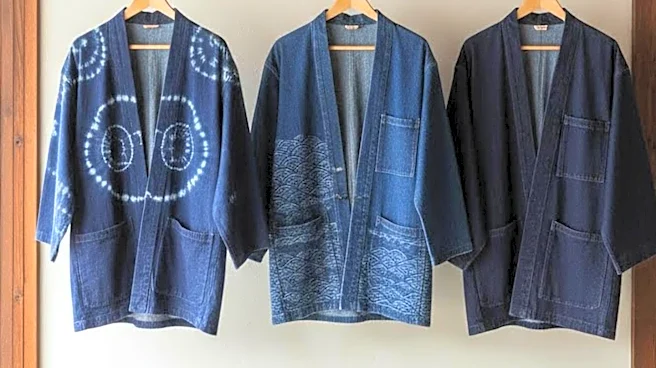
Japanese Indigo dyeing, known as 'aizome,' is a traditional craft rooted in the cultivation of the Persicaria tinctoria plant. This method involves harvesting indigo leaves and processing them through
fermentation to create deep blue hues. Unlike some other dyeing techniques, Japanese Indigo is celebrated for its ability to produce vibrant, complex colors that develop a unique patina over time. The dye is also recognized for its colorfastness, resisting fading even after numerous washes. This meticulous process, from soil to thread, emphasizes patience and craftsmanship, making it a revered practice in textile production, particularly for denim. The tradition highlights a commitment to natural processes and durability in finished products.
Why It's Important?
The enduring appeal and unique properties of Japanese Indigo dyeing hold significant importance in the global textile industry, particularly within the premium denim market. Its reputation for deep, rich blues and colorfastness makes it highly sought after by consumers and brands prioritizing quality and longevity. The traditional, often organic, farming methods and minimal chemical additives associated with Japanese Indigo align with growing consumer demand for sustainable and environmentally friendly products. This focus on ecological balance and natural processes offers a contrast to synthetic dyes, influencing manufacturing practices and consumer choices in the U.S. and beyond. For businesses, investing in Japanese Indigo can differentiate products in a competitive market, appealing to a niche that values heritage, craftsmanship, and sustainability, potentially leading to higher perceived value and brand loyalty.
What's Next?
The continued appreciation for traditional Japanese Indigo dyeing suggests a sustained demand for artisanal and sustainable textile products. As environmental consciousness grows, more brands may explore incorporating such natural dyeing methods into their production lines, potentially leading to increased partnerships between Japanese artisans and international textile manufacturers. Educational initiatives and cultural exchanges could further promote the understanding and adoption of 'aizome' techniques. Consumers are likely to see a broader range of products, especially in premium apparel and home goods, featuring Japanese Indigo, driven by its aesthetic appeal and eco-friendly credentials. This trend could also spur innovation in natural dyeing processes, as companies seek to replicate or adapt these traditional methods on a larger scale while maintaining their inherent qualities.
Beyond the Headlines
Beyond its aesthetic and practical benefits, Japanese Indigo dyeing embodies a profound cultural and ethical dimension. The practice reflects a deep respect for nature and a philosophy of slow craftsmanship, contrasting sharply with fast fashion's rapid production cycles. This traditional approach fosters a connection to history and heritage, where each dyed garment tells a story of meticulous effort and natural transformation. The emphasis on durability and aging gracefully encourages a more sustainable consumption model, where items are cherished and maintained over time rather than being quickly discarded. This cultural ethos can inspire broader shifts in consumer behavior and industry practices, promoting a greater appreciation for the origins and impact of the products we use, and highlighting the value of human skill and natural resources in an increasingly industrialized world.