





What's Happening?
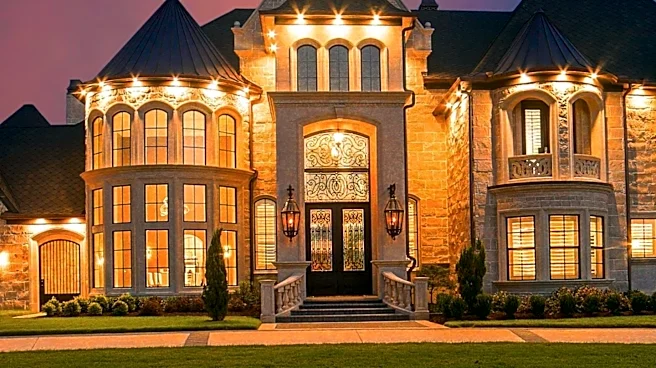
Wealthy homebuyers in the Hamptons are increasingly purchasing properties inland, away from traditional oceanfront locations, for prices comparable to beachfront estates. This shift is driven by a desire for more space, privacy, and elaborate amenities
that are becoming difficult to achieve on the heavily regulated coastline. For decades, oceanfront properties commanded the highest prices, but now, sales in the $20 million range are occurring 'north of the highway' on bays and sprawling interior parcels. A notable example is a new Piero Lissoni-designed spec house in Montauk, 29 Wills Point Road, which sold for its full $23 million asking price after just three days on the market, setting a new record for a non-oceanfront home in the area. This trend is largely attributed to recent zoning changes in East Hampton Town, which cut the maximum size of single-family homes from 20,000 to 10,000 square feet and introduced formulas tying square footage to lot size. Additionally, oceanfront parcels face extra FEMA and coastal regulations, making it nearly impossible to build large, amenity-rich estates directly on the beach.
Why It's Important?
This evolving real estate trend in the Hamptons signifies a significant change in the luxury housing market, driven by regulatory constraints and shifting buyer preferences. The increased demand and valuation of inland properties indicate that space and the ability to customize large estates with features like barns, tennis, and padel courts are now as, if not more, desirable than direct ocean access for ultra-wealthy buyers. This could lead to a redistribution of wealth and development across the Hamptons, potentially revitalizing previously less sought-after areas. For local governments, this shift might influence future zoning and development policies, as they balance conservation efforts with economic growth. The trend also highlights the impact of environmental regulations, such as FEMA and coastal rules, on real estate markets, pushing development away from vulnerable coastal areas. While oceanfront properties will likely retain their value due to scarcity, the inland market is poised for continued growth and increased investment, altering the traditional hierarchy of Hamptons real estate.
What's Next?
The trend of high-value inland sales in the Hamptons is expected to continue, with brokers already preparing to list more multi-million dollar spec mansions north of the highway. This suggests a sustained demand for larger parcels that can accommodate extensive amenities, which are increasingly restricted on oceanfront lots. Appraisers note that while this is still a niche within the super-luxury market, it is in its early stages of evolution and could expand further. Local zoning boards and planning departments may face pressure to adapt to these changing development patterns, potentially leading to further revisions of land-use regulations. However, oceanfront properties are not expected to lose their allure entirely; their scarcity will likely continue to drive up prices, especially for off-market deals. The long-term outlook points to a more diversified luxury real estate market in the Hamptons, where both coastal and inland properties command premium prices, albeit for different reasons, with space and privacy becoming as valuable as a direct ocean view.
Beyond the Headlines
The Hamptons real estate shift reflects broader themes of environmental adaptation, regulatory impact, and evolving definitions of luxury. The increasing difficulty of building large estates on the coast due to environmental regulations underscores the growing awareness and legal frameworks around coastal protection and climate change. This trend could serve as a microcosm for how other high-value coastal regions might adapt to similar pressures. Culturally, it challenges the long-held perception that ultimate luxury is synonymous with oceanfront living, suggesting a new appreciation for expansive, private estates that offer a wider range of lifestyle amenities. Ethically, it raises questions about equitable access to land and resources, as regulatory changes in exclusive areas can inadvertently concentrate development and wealth in specific inland zones. The long-term implication could be a redefinition of 'prime' real estate, where factors like acreage, privacy, and the ability to build bespoke amenities become paramount, potentially leading to new architectural and landscape design trends that prioritize integration with natural inland environments.