





What's Happening?
Singer Ciara has revealed a unique Christmas rule for her 12-year-old son, Future Zahir, and her older children: 'If you don't believe, you don't receive.' This policy is designed to maintain the magic of Santa Claus and the Elf on the Shelf for her younger
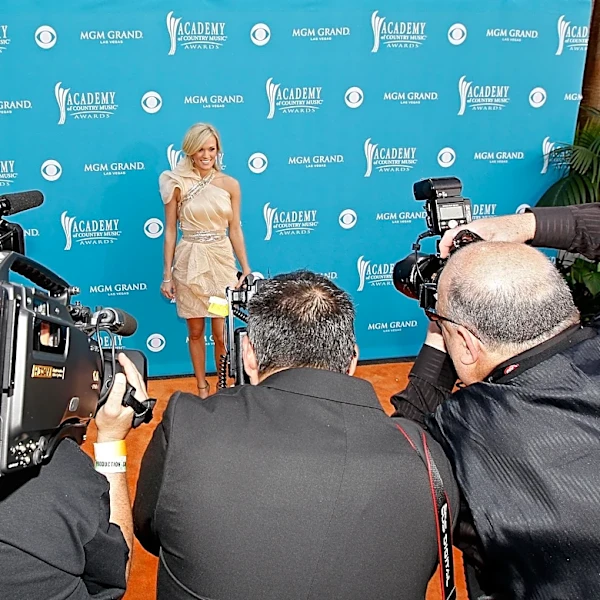
children, six-year-old Win Harrison and two-year-old Amora Princess. Ciara shared this playful but firm stance during the Macy's Santaland premiere in New York City on November 12. She noted that Future Zahir understands the importance of upholding the tradition, while her nine-year-old daughter, Sienna Princess, is beginning to ask logistical questions about Santa. Despite the older children's growing curiosity, Ciara emphasizes the need to 'stick with the script and the program' to preserve the festive spirit for the younger ones. The family's holiday traditions also include matching pajamas, baking cookies, decorating the house, and playing UNO.
Why It's Important?
This story highlights the evolving dynamics within families as children grow and begin to question childhood myths like Santa Claus. Ciara's approach reflects a common parental challenge: how to balance fostering imagination and wonder for younger children while acknowledging the developing understanding of older siblings. The 'believe to receive' rule serves as a creative strategy to encourage older children to participate in maintaining family traditions, thereby strengthening familial bonds and creating shared experiences. It underscores the cultural significance of holiday rituals in shaping family identity and creating lasting memories. The narrative also subtly touches upon consumer culture, with Future Zahir's desire for an iPhone, illustrating how modern technology integrates into traditional holiday wish lists and family discussions about gifts.
What's Next?
As the holiday season progresses, Ciara and Russell Wilson's family will continue to engage in their established Christmas traditions, with Future Zahir likely playing a key role in upholding the 'magic' for his younger siblings. The effectiveness of the 'believe to receive' rule will be tested as Sienna Princess's curiosity about Santa potentially grows. Future Zahir's iPhone request will also be a point of interest, showcasing how parents navigate gift-giving expectations in a technologically advanced world. The family's public sharing of their holiday practices may also influence other parents seeking creative ways to manage similar situations, potentially sparking broader conversations about maintaining childhood wonder in an age of increasing skepticism and digital influence.
Beyond the Headlines
Beyond the immediate holiday context, Ciara's rule touches upon broader themes of storytelling, collective belief, and the transition from childhood innocence to adolescent understanding. The 'magic' of Santa Claus can be viewed as a cultural narrative that families collectively construct and maintain, serving as a powerful tool for fostering imagination, generosity, and shared joy. The moment children begin to question these narratives marks a significant developmental stage, prompting parents to adapt their strategies. Ciara's playful enforcement of belief can be seen as an attempt to extend this period of wonder, highlighting the emotional and psychological value parents place on preserving childhood fantasy. It also subtly reflects societal pressures on parents to create 'perfect' holiday experiences, often involving elaborate traditions and gift-giving.