





What's Happening?
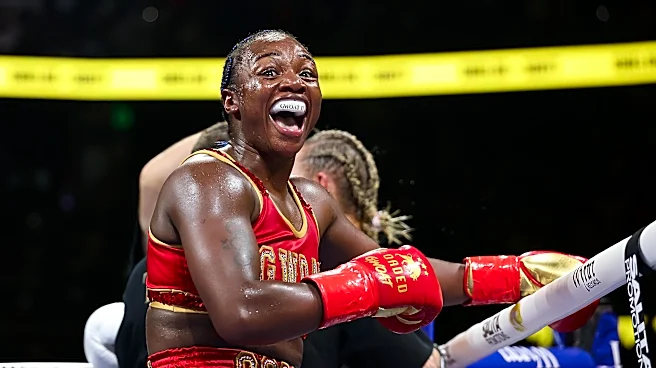
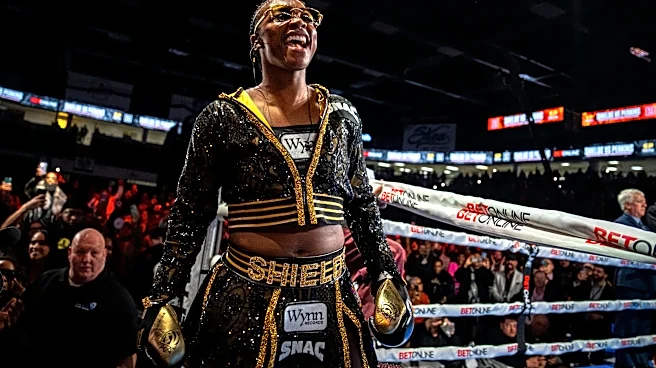
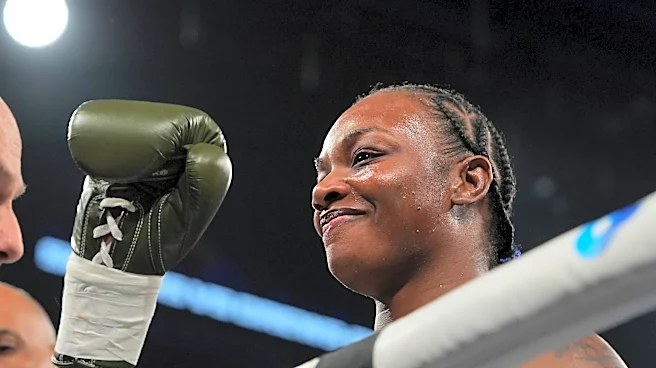
Chantelle Cameron, a prominent female boxer, is a vocal advocate for extending women's professional boxing rounds from two minutes to three minutes, aligning them with men's professional boxing standards. Cameron argues that the current two-minute rounds hinder
the sport's progression and prevent female boxers from achieving equal rights and pay. She previously relinquished her WBC world title in protest of the organization's stance against three-minute rounds, which the WBC president, Mauricio Sulaimán, defended by citing safety concerns and comparisons to other sports with differing rules for men and women. Cameron believes that female fighters are fully capable of competing in three-minute rounds and that the current format is detrimental to the sport's credibility and the athletes' development. She highlights that amateur women's boxing already features three-minute rounds, further underscoring her point about the professional circuit's disparity.
Why It's Important?
Cameron's advocacy is crucial for the advancement of women's boxing in the U.S. and globally. The push for three-minute rounds directly addresses issues of gender equality in professional sports, impacting athletes' earning potential, career longevity, and public perception. If successful, this change could lead to increased viewership, sponsorship, and prize money for female boxers, bringing them closer to parity with their male counterparts. The current two-minute round structure is seen by many as a barrier to showcasing the full skill and endurance of female fighters, potentially limiting their marketability and the sport's overall growth. Achieving equal round lengths would not only be a symbolic victory for gender equality but also a practical step towards professionalizing women's boxing to the same standard as men's, potentially attracting more talent and investment into the sport.
What's Next?
The debate over round length in women's boxing is expected to continue, with athletes like Cameron pushing for policy changes within sanctioning bodies such as the WBC. Future discussions will likely involve medical professionals, promoters, and other stakeholders to re-evaluate the safety and competitive implications of longer rounds. The outcome could influence how women's boxing matches are structured, potentially leading to a gradual adoption of three-minute rounds across various organizations. This shift would necessitate adjustments in training regimens, fight strategies, and potentially the overall competitive landscape of women's boxing. The ongoing dialogue will also highlight the broader conversation around gender equity in sports, potentially inspiring similar movements in other disciplines where disparities in rules or compensation exist.
Beyond the Headlines
The controversy surrounding round lengths in women's boxing extends beyond mere athletic rules; it touches upon deeper societal perceptions of female strength, endurance, and capability. The WBC's justification for shorter rounds, citing safety concerns, can be interpreted as a paternalistic view that undermines the physical prowess of female athletes. This debate reflects a broader struggle for women in male-dominated fields to be recognized and compensated equally, challenging ingrained biases and stereotypes. A successful transition to three-minute rounds would not only elevate women's boxing but also send a powerful message about gender equality in sports, potentially influencing cultural attitudes and encouraging greater investment in female athletic development and opportunities. It underscores the ethical imperative to provide equal opportunities and recognition based on merit, not gender.