








What's Happening?
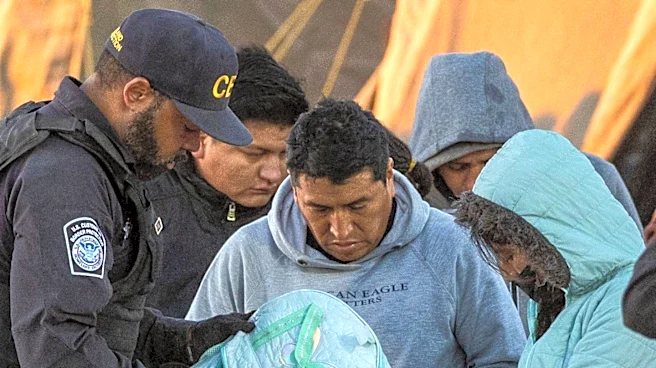
U.S. Customs and Border Protection (CBP) has significantly ramped up its enforcement of Section 307 of the Tariff Act of 1930, which prohibits the import of goods made with forced labor. Since June 2022, CBP has stopped 44,651 shipments valued at $4.14
billion under the Uyghur Forced Labor Prevention Act (UFLPA). Of these, 27,098 shipments were denied entry, 15,547 were released, and the remainder are still under review. The Department of Homeland Security (DHS) expanded the UFLPA Entity List by 43 entities on July 31, 2026, bringing the total to 187. This expansion underscores the U.S. government's commitment to combating forced labor in supply chains, particularly concerning goods linked to China's Xinjiang region or entities on the UFLPA Entity List. Importers are now required to demonstrate 'reasonable care' in ensuring their supply chains are free of forced labor, extending to raw materials and all tiers of suppliers.
Why It's Important?
This intensified enforcement has significant implications for U.S. importers and global supply chains. Businesses importing goods into the U.S. face increased scrutiny and a higher burden of proof to demonstrate that their products are not made with forced labor. The UFLPA creates a presumption that goods from the Xinjiang region or from listed entities are produced with forced labor, shifting the responsibility to importers to provide 'clear and convincing evidence' to rebut this presumption. Failure to comply can result in costly shipment detentions, denials of entry, and potential financial penalties. This policy aims to protect human rights and ensure fair labor practices globally, but it also introduces complexities and compliance challenges for companies, particularly those with intricate multi-tier supply chains or those sourcing commodity inputs that are often commingled.
What's Next?
Importers must proactively strengthen their Section 307 compliance programs. This includes mapping their supply chains to the raw material level, identifying high-risk products, suppliers, and regions, and assessing forced labor indicators using the 11 ILO Indicators of Forced Labour. CBP expects continuous due diligence, including independent, unannounced audits and worker-level channels for reporting. Companies should maintain comprehensive documentation for every entity in their supply chain, covering supplier and production records, traceability records, and due diligence records. In the event of a shipment detention, importers will face tight deadlines, often as short as 30 days under UFLPA, to provide evidence. Membership in programs like the Customs Trade Partnership Against Terrorism (CTPAT) Trade Compliance can offer benefits such as priority review and advance notice of potential holds.
Beyond the Headlines
The U.S. government's aggressive stance on forced labor imports reflects a broader trend towards integrating human rights considerations into international trade policy. This approach not only aims to address ethical concerns but also seeks to level the playing field for businesses that adhere to ethical labor standards. The focus on supply chain transparency and traceability could lead to a fundamental restructuring of global sourcing practices, pushing companies to invest more in ethical sourcing and supplier oversight. The policy also highlights the challenges of enforcing such regulations across complex global networks, where visibility beyond direct suppliers is often limited. The long-term impact could include increased costs for consumers as companies absorb compliance expenses, but also a potential shift towards more resilient and ethically sound supply chains.