



What's Happening?
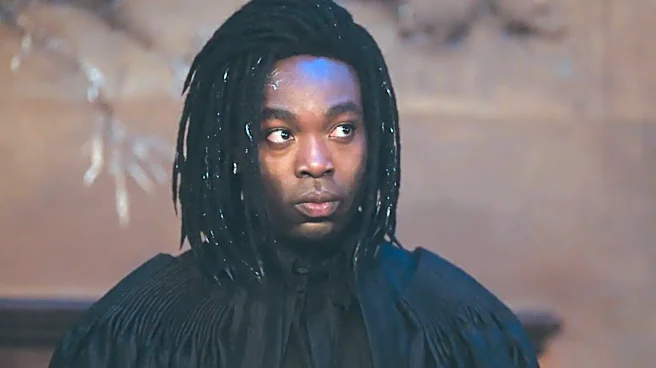
Actor Paapa Essiedu, cast as Severus Snape in the upcoming HBO Harry Potter series, has publicly stated his refusal to discuss author J.K. Rowling's controversial views on gender identity. Essiedu emphasized his personal belief in the right of trans and
queer individuals to be treated with respect, dignity, and safety. His casting, along with other co-stars like John Lithgow and Warwick Davis, has drawn criticism due to their involvement in a project led by Rowling, who has been outspoken on gender identity issues, views that critics deem transphobic. Essiedu was among hundreds of film and TV professionals who signed an open letter advocating for trans rights following a UK Supreme Court ruling on the legal definition of a woman, a decision Rowling had celebrated. Rowling previously addressed Essiedu's signing of the letter on X, stating she would not remove an actor for holding legally protected beliefs.
Why It's Important?
This situation highlights the ongoing tension between artistic projects and the personal views of their creators, particularly in the entertainment industry. For U.S. audiences and the industry, it underscores the challenges actors face when participating in popular franchises whose creators hold controversial stances. The controversy could impact the reception of the new Harry Potter series, potentially alienating segments of the audience who disagree with Rowling's views or support Essiedu's stance on trans rights. It also brings to the forefront discussions about the responsibility of public figures to address social issues and the potential for financial success from such projects to fund causes deemed harmful by certain groups. The debate reflects broader societal divisions regarding gender identity and free speech.
What's Next?
The HBO Harry Potter series is scheduled to premiere on December 25, 2026, with each season adapting one of Rowling's seven books. The ongoing controversy surrounding J.K. Rowling's views and actors' responses is likely to continue as the release date approaches and throughout the series' run. Public and media scrutiny will remain on how the cast and production team navigate these discussions. The financial success of the series could further fuel debates, especially if a portion of the proceeds is perceived to support organizations with controversial stances on gender identity. The entertainment industry may continue to grapple with how to balance creative freedom with social responsibility and the personal beliefs of those involved in major productions.
Beyond the Headlines
The situation extends beyond a simple casting announcement, touching upon complex ethical and cultural dimensions within the entertainment industry and society at large. It raises questions about the separation of art from artist, particularly when the artist's views are perceived as harmful by significant portions of the audience and industry professionals. The backlash and Essiedu's response also highlight the increasing pressure on public figures to take clear stances on social issues, and the potential for such stances to lead to both support and criticism, including racist animosity as experienced by Essiedu. This ongoing dialogue could influence future casting decisions, production strategies, and the broader conversation around inclusivity and representation in media.