



What's Happening?
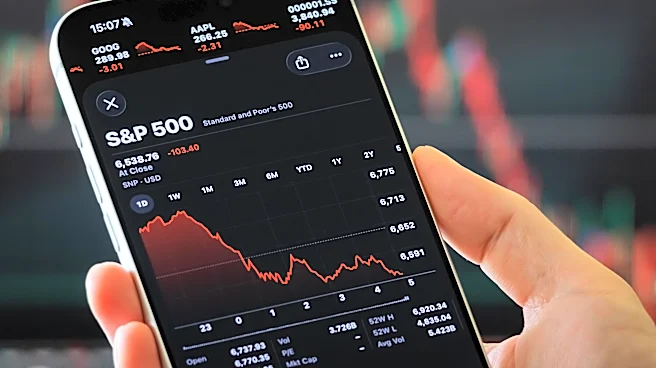
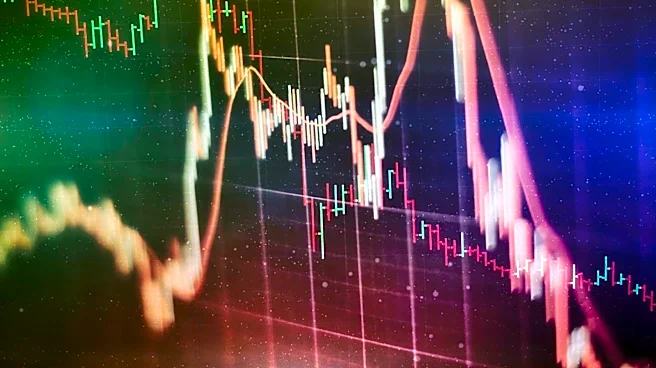
Jeremy Siegel, a finance professor at the Wharton School and chief economist for WisdomTree, has observed a potential 'double bottom' formation in Nasdaq futures, signaling a possible market floor. This observation comes after Nasdaq futures twice rebounded
quickly from near the same low point. Siegel notes that while some AI-related stocks have seen significant declines of 40% to 70%, the overall U.S. stock market's earnings expectations for the year are still being revised upwards. He also points out that long-term U.S. Treasury yields have fallen, and gasoline prices are decreasing, which could alleviate household spending pressures. Despite these positive indicators, the market is also grappling with concerns over the Federal Reserve's stance on interest rates and the performance of bonds issued by AI infrastructure companies like CoreWeave.
Why It's Important?
Siegel's analysis is important for U.S. investors and financial markets as it suggests that the recent market downturn, particularly in the technology sector, might be nearing its end. A 'double bottom' pattern is often interpreted as a bullish signal, indicating that a security or index has found strong support and is likely to reverse its downward trend. If this holds true, it could lead to a recovery in investor confidence and a rebound in stock prices, especially for AI-related companies that have experienced substantial corrections. However, the market's sensitivity to potential Federal Reserve interest rate hikes and the financial health of AI infrastructure companies remain critical factors. The divergence between rising earnings expectations and falling stock prices suggests that investor sentiment, rather than fundamentals, has been a primary driver of the recent volatility.
What's Next?
Looking ahead, the market will closely monitor the Federal Reserve's next moves regarding interest rates, with Siegel anticipating a potential 25-basis-point hike. The performance of AI-related stocks will also be a key indicator, as their ability to rebound could signal broader market recovery. Investors will be evaluating policy changes following the midterm elections, the return of Nvidia's CEO, computing power pricing, and the outlook for the Chinese market, all of which could influence expectations for AI infrastructure development and investment returns. If market sentiment shifts to more accurately reflect the upward revisions in AI business profit expectations, Siegel believes that related stocks could see a more significant rebound.
Beyond the Headlines
The current market dynamics highlight a broader tension between technological innovation and macroeconomic pressures. While AI businesses show strong growth potential and high-profit margins, the financing of their infrastructure through bonds is facing scrutiny. This raises questions about the sustainability of rapid expansion in capital-intensive tech sectors, especially if interest rates continue to rise. The differing risk profiles for bondholders and shareholders in such companies are also becoming more apparent; bondholders primarily receive fixed returns, while shareholders benefit more significantly from profit growth but also bear greater risk during downturns. This situation underscores the need for investors to carefully assess both the growth prospects and financial stability of companies in emerging tech sectors.