





What's Happening?
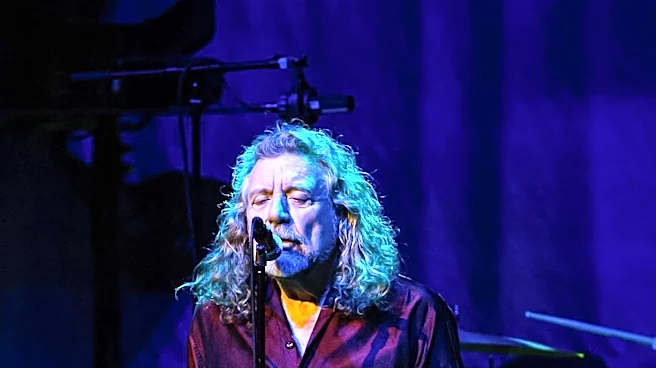
Robert Plant, the renowned singer, is frequently cited in discussions regarding vocal range and performance, with his approach to singing often likened to a 'sports-like pursuit.' This comparison highlights the demanding and athletic nature of his vocal delivery.
While some analyses focus on scientific measurements of vocal range, Plant's contributions are recognized for their dynamic quality and extensive range. The intensity of such performances, however, can lead to vocal strain, as noted by other musicians discussing the challenges of maintaining high vocal standards over extensive touring schedules. Plant's perspective on performing as an athletic endeavor underscores the physical commitment required for his iconic vocal style.
Why It's Important?
The characterization of Robert Plant's singing as a 'sports-like pursuit' is important because it reframes the understanding of vocal performance, emphasizing the physical and disciplined aspects often overlooked in artistic fields. This perspective can influence how vocalists train and maintain their voices, potentially leading to more structured and health-conscious approaches to their careers. For the music industry, recognizing the athletic demands of singing could lead to better support systems for artists, including vocal coaches, physical therapists, and tour scheduling that prioritizes vocal health. This shift in perception could also impact music education, encouraging a more holistic view of vocal training that incorporates physical conditioning alongside artistic development. Ultimately, it highlights the rigorous demands placed on performers and the need for sustainable practices to ensure longevity in their careers.
What's Next?
The ongoing discussion about the physical demands of singing, exemplified by Robert Plant's 'sports-like pursuit' analogy, could lead to increased awareness and research into vocal health for musicians. This might prompt music institutions and artist management to integrate more comprehensive vocal training and wellness programs, similar to those found in professional sports. Future developments could include specialized vocal conditioning coaches, advanced diagnostic tools for vocal cord health, and tour schedules designed to minimize strain and prevent long-term damage. Artists themselves may become more vocal about the need for such support, advocating for industry-wide changes that prioritize their physical well-being. This evolving understanding could also influence how vocal talent is scouted and developed, with a greater emphasis on sustainable technique and physical resilience.
Beyond the Headlines
Beyond the immediate implications for vocal health, the comparison of singing to an athletic pursuit touches upon deeper cultural perceptions of art and labor. It challenges the romanticized notion of effortless talent, revealing the intense physical work and discipline behind celebrated performances. This perspective can foster a greater appreciation for the dedication of artists like Robert Plant, moving beyond superficial admiration to acknowledge the profound physical and mental investment required. Ethically, it raises questions about the responsibility of the entertainment industry to protect its artists from burnout and long-term health issues, similar to how professional sports leagues address athlete welfare. Culturally, it could lead to a broader re-evaluation of how society values and supports artistic professions, recognizing them not just as creative endeavors but as demanding forms of labor that require significant physical and mental resilience.