





What's Happening?
Solo travelers are increasingly utilizing online communities, social media, and group tours to find companions for their outdoor adventure trips. Platforms like Reddit's r/solotravel, Solo Traveler, and Backpackr provide forums for individuals to connect,
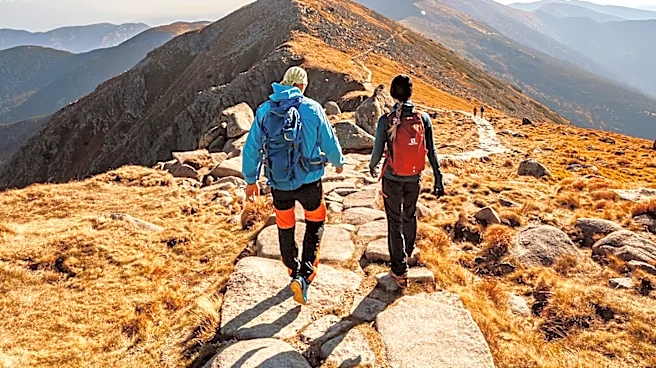
share experiences, and seek advice. Social media channels such as Facebook and Instagram, through dedicated groups and hashtags like #solotravel, facilitate connections among like-minded adventurers. Additionally, attending solo travel events, meetups, and workshops offers in-person opportunities to meet potential travel buddies. Group tours and guided adventures, which often focus on activities like hiking, rock climbing, and kayaking, are also popular avenues for solo travelers to find companions and explore new destinations with expert guidance. These methods aim to mitigate the daunting aspects of solo travel by fostering connections and shared experiences.
Why It's Important?
This trend highlights a significant shift in how individuals approach solo travel, moving from purely independent journeys to a more communal experience facilitated by digital tools and organized activities. For the travel industry, this signifies a growing market for specialized group tours and adventure packages tailored to solo travelers seeking companionship. It also underscores the importance of online presence and community building for travel companies and platforms. The rise of these connection methods can lead to increased participation in outdoor adventure activities, potentially boosting local economies in popular adventure destinations. Furthermore, it addresses a common concern for solo travelers—safety and loneliness—by providing structured ways to find reliable and compatible travel partners, thereby expanding the accessibility and appeal of adventure travel to a broader demographic. This evolution could also influence the development of new travel insurance products designed for group adventure travel.
What's Next?
The continued growth of online communities and social media platforms dedicated to solo travel will likely lead to more sophisticated matching algorithms and specialized interest groups, further refining the process of finding compatible travel companions. Travel companies are expected to expand their offerings of group tours and guided adventures, potentially introducing more niche activities and destinations to cater to diverse interests. We may also see an increase in hybrid travel models, where solo travelers join a group for a portion of their trip and then venture independently. The success of these initiatives will depend on maintaining a balance between fostering genuine connections and ensuring the safety and quality of shared travel experiences. Additionally, the development of new apps or features specifically designed for solo travelers to find companions in real-time during their trips could emerge.
Beyond the Headlines
This phenomenon reflects a broader societal trend of leveraging digital connectivity to overcome traditional barriers to participation in activities, in this case, solo travel. It challenges the conventional notion of solo travel as a purely solitary endeavor, suggesting a desire for independence coupled with a need for social connection. The ethical implications of online matching for travel, including privacy concerns and the potential for misrepresentation, will become increasingly important. Furthermore, the emphasis on shared outdoor adventures could foster a greater appreciation for environmental conservation among participants, as they collectively experience and value natural landscapes. This shift also highlights the evolving definition of 'community' in the digital age, where geographical proximity is less critical than shared interests and goals in forming meaningful connections, even for temporary travel partnerships.