




What's Happening?
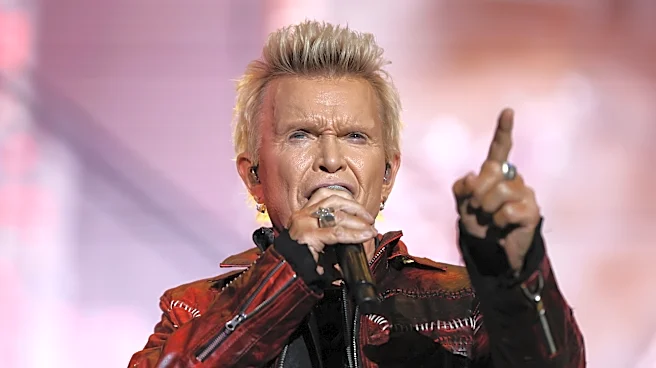
The Rock & Roll Hall of Fame has announced its 2026 inductees, featuring eight acts largely associated with the Generation X era: Phil Collins, Billy Idol, Iron Maiden, Joy Division/New Order, Oasis, Sade, Luther Vandross, and Wu-Tang Clan. According
to University of Virginia pop culture expert Jack Hamilton, an associate professor of media studies and American studies, this selection reflects the Hall of Fame's ongoing effort to broaden its definition of inductable music to maintain relevance as genres evolve. Hamilton highlighted the significant influence of these artists, noting Joy Division's impact on indie rock, Oasis's commercial success as one of the last major rock bands with Beatles-influenced songwriting, and Phil Collins's substantial influence on 21st-century pop music, despite past criticisms of his synthetic sound. The induction of Joy Division/New Order as a single entry acknowledges the band's evolution after the death of lead singer Ian Curtis.
Why It's Important?
This wave of inductions is significant as it formally recognizes artists who shaped the musical landscape for a generation, particularly those who came to prominence in the 1980s and 1990s. The inclusion of acts like Joy Division/New Order, influential in indie rock, and Oasis, a commercially massive rock band, underscores the diverse impact of these artists beyond traditional rock definitions. Phil Collins's induction, despite his prior entry with Genesis, highlights his individual influence on contemporary pop, affecting artists like Drake and Kanye West. This broader acceptance by the Rock & Roll Hall of Fame could influence how music history is perceived and taught, potentially leading to a re-evaluation of artists and genres that were once considered outside the mainstream rock canon. It also signals a shift in cultural institutions to adapt to changing tastes and the increasing diversity of popular music.
What's Next?
The induction ceremony will formally celebrate these artists, likely sparking renewed interest in their discographies and legacies. This recognition by the Rock & Roll Hall of Fame could lead to increased streaming, album sales, and potential reunion tours or special performances for some of the inductees. For music critics and historians, these inductions will likely prompt further discussion and analysis of the cultural impact and enduring relevance of Gen X-era music. The Hall of Fame's continued expansion of its criteria suggests future inductions may further diversify, potentially including more artists from hip-hop, R&B, and other genres that have significantly influenced popular music.
Beyond the Headlines
The Rock & Roll Hall of Fame's decision to induct a diverse group of artists from the Gen X era, including those from indie rock, pop, and R&B, reflects a deeper cultural shift in how 'rock and roll' is defined. This move challenges purist notions of the genre, acknowledging that its influence extends far beyond guitar-driven music. It highlights the interconnectedness of various musical styles and the cross-pollination of sounds that have shaped modern music. The inclusion of artists like Phil Collins, whose pop sensibilities were once criticized, and Joy Division/New Order, with their indie rock roots, suggests a more inclusive and less genre-restrictive approach to recognizing musical greatness. This evolution in recognition could encourage future generations of artists to experiment across genres, knowing that their contributions might eventually be celebrated by institutions that once held narrower definitions of musical merit.