








What's Happening?
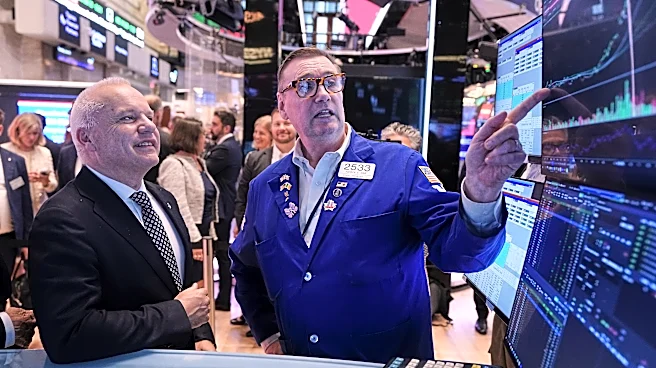
Seth Bernstein, CEO of AllianceBernstein, has expressed concerns about a potential bubble in the artificial intelligence (AI) sector, drawing parallels to the dot-com bubble of the late 1990s. Despite the transformative potential of AI, Bernstein highlights
that only a small percentage of executives are currently seeing returns on their AI investments. He notes that while AI stocks, including major players like Microsoft, Amazon, and Alphabet, have experienced significant gains, the high valuations could pose risks if expectations are not met. Bernstein uses AI for various internal processes at AllianceBernstein, acknowledging its profound impact on business operations. However, he cautions that the current market concentration and high valuations, coupled with external factors like inflation, could lead to a market correction.
Why It's Important?
The potential AI bubble is significant for investors and the broader economy, as it could lead to substantial market corrections if the high expectations for AI are not realized. The concentration of AI stocks in major indices like the S&P 500 means that any downturn could have widespread effects on the market. Additionally, the high valuations of AI stocks could deter new investments if a correction occurs. Bernstein's warning serves as a reminder of the risks associated with speculative investments, particularly in emerging technologies. The situation also underscores the importance of diversification in investment portfolios to mitigate potential losses from sector-specific downturns.
What's Next?
Bernstein suggests that investors should consider diversifying their portfolios by moving some investments outside the U.S., as the current market concentration in AI stocks poses a risk. He anticipates a market correction but cannot predict its timing. Investors and financial advisors may need to reassess their strategies to account for potential volatility in the AI sector. Additionally, ongoing discussions about inflation and its impact on the economy could influence investment decisions and market dynamics in the coming months.