







What's Happening?
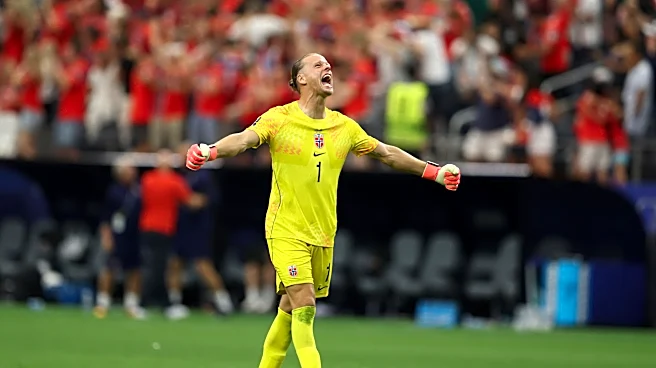
Norwegian football fans have introduced a new chant called the 'Viking row' during the 2026 World Cup, which has become a viral phenomenon. The chant involves fans sitting as if in a longboat and mimicking rowing motions while chanting 'Ro', the Norwegian word
for 'row'. This synchronized action, accompanied by a drumbeat, has been embraced by fans, players, and even Norwegian MPs. The chant was devised by Ole Frøystad, inspired by a chant from the Norwegian football club Rosenborg BK. The Viking row has gained massive popularity, with videos of the chant going viral online, and has been performed in various locations, including stadiums and even the Norwegian parliament.
Why It's Important?
The Viking row has transcended its origins as a simple football chant to become a cultural phenomenon, uniting Norwegians in support of their national team. This widespread adoption highlights the power of sports to foster national pride and community spirit. The chant's popularity also underscores the influence of social media in spreading cultural trends globally. However, the use of Viking imagery has sparked some controversy, with critics pointing out its associations with far-right groups and historical inaccuracies. Despite this, the chant has been largely embraced as a symbol of Norwegian culture and identity, showcasing the country's unique contribution to the World Cup.
What's Next?
As Norway continues its World Cup journey, the Viking row is expected to remain a prominent feature of their matches. The chant's popularity may inspire other nations to develop their own unique traditions, further enriching the cultural tapestry of international sports events. Additionally, the debate over the use of Viking imagery may continue, prompting discussions about cultural representation and historical accuracy in sports. The Norwegian team's performance in the tournament will likely influence the chant's longevity and impact, potentially solidifying its place in football history.
Beyond the Headlines
The Viking row's success highlights the role of sports in cultural diplomacy, as it brings international attention to Norway and its traditions. This phenomenon also raises questions about the commercialization of cultural symbols and the balance between national pride and global inclusivity. As the chant gains traction, it may influence how other countries approach cultural representation in sports, encouraging a more thoughtful and respectful engagement with historical symbols. The Viking row serves as a reminder of the power of sports to transcend borders and foster a sense of global community.