






What's Happening?
Charlotte Hornets owners Rick Schnall and Gabe Plotkin are actively working to rebuild the team's fan base and community engagement following their $3 billion purchase of the franchise. Their efforts include significant investments in arena renovations,
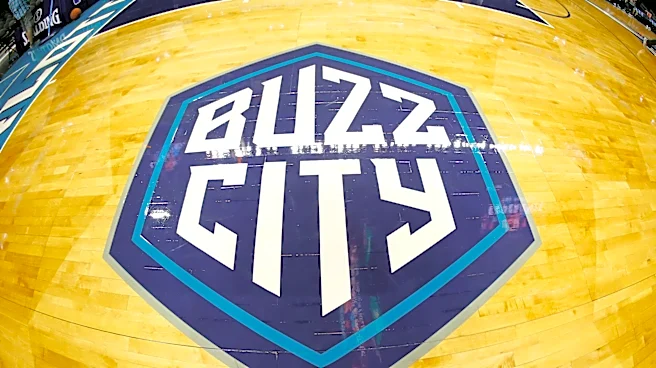
a new training facility, and a renewed focus on fan experience. The owners faced initial skepticism and anger from season-ticket holders regarding ticket price increases and the team's poor performance. In response, Schnall and Plotkin have engaged directly with fans, including a contentious meeting with the 'Hive Society' in February 2024, where they listened to grievances about the team's record and lack of community representation. They have also implemented initiatives such as a 'Buzz City Babies' program, providing Hornets onesies to newborns, and a 'Hugo’s Hive' menu offering $2 hot dogs and other classic concessions to address fan complaints about arena food prices. These actions are part of a broader strategy to reconnect with both new residents of Charlotte and long-time 'legacy fans' who remember the team's earlier success.
Why It's Important?
This initiative is important for the U.S. sports industry as it demonstrates a comprehensive approach to franchise revitalization beyond on-court performance. The owners' willingness to directly address fan dissatisfaction, invest heavily in infrastructure, and implement fan-friendly policies like reduced concession prices can serve as a model for other sports organizations struggling with fan engagement. For the Charlotte community, the efforts to reconnect with 'legacy fans' and integrate new residents into the fan base could foster a stronger sense of civic pride and community identity around the team. Economically, the significant investment in the Spectrum Center renovation and the new Novant Health Performance Center, totaling hundreds of millions of dollars, will create jobs and stimulate local businesses. The focus on community engagement, including charitable donations through the Chairman Legacy Fund, also highlights a growing trend of sports franchises taking on broader social responsibilities, potentially influencing public policy discussions around the role of professional sports teams in urban development and community welfare.
What's Next?
The Charlotte Hornets' ownership group plans to continue their multi-faceted approach to fan engagement and team improvement. The Novant Health Performance Center, a 160,000-square-foot training facility, is scheduled to open in spring 2027, providing state-of-the-art resources for players and further demonstrating the owners' commitment. The team will also continue to leverage events like the retirement of Dell Curry's jersey to draw back legacy fans and create memorable experiences. Further initiatives to enhance the in-arena experience, such as consulting with Olympic Games experts for game operations, are expected. The success of these efforts will be measured by sustained increases in attendance, ticket sales, and fan satisfaction, building on the significant year-over-year growth already observed. The owners' competitive drive suggests a continued focus on improving the team's on-court performance, which will be crucial for long-term fan loyalty and the ultimate success of their revitalization strategy.
Beyond the Headlines
The Hornets' revitalization strategy delves into the deeper psychological and cultural aspects of sports fandom. The initial hostile reaction from season-ticket holders underscores the emotional investment fans have in their teams, highlighting that loyalty is not solely transactional but deeply rooted in identity and shared history. The owners' decision to sit and listen to angry fans, rather than dismiss their concerns, reflects an understanding that rebuilding trust requires authenticity and empathy. The emphasis on 'authenticity and teamwork' in their vision for winning the community back speaks to a broader cultural shift where consumers, including sports fans, demand more genuine connections with brands and institutions. Furthermore, the strategy of targeting both newborns with team merchandise and older 'legacy fans' with nostalgic offerings demonstrates a sophisticated understanding of generational marketing and the importance of cultivating a fan base across all age demographics. This approach could set a precedent for how professional sports teams navigate the complex interplay between business, community, and emotional attachment in the modern era.