





What's Happening?
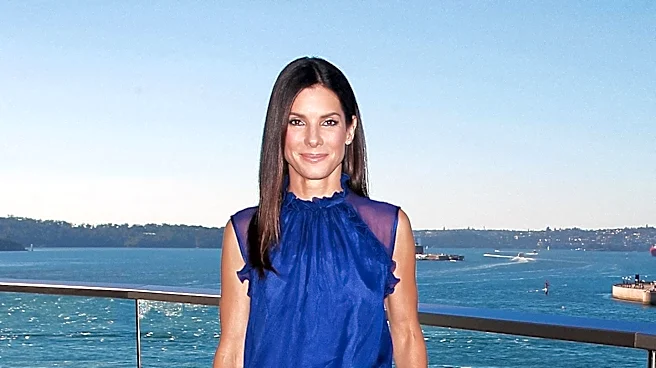
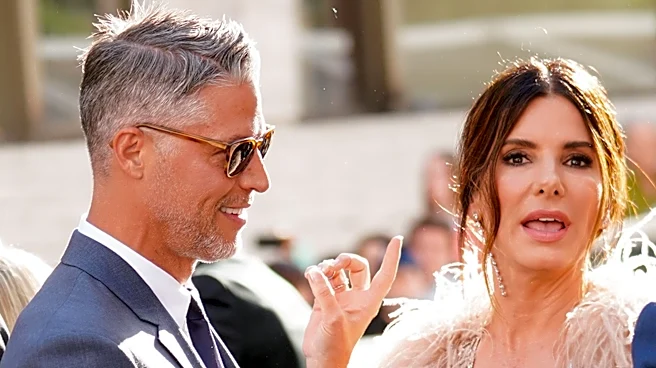
Actress Sandra Bullock has publicly shared details about the private battle her late partner, Bryan Randall, faced with Amyotrophic Lateral Sclerosis (ALS). During an appearance on the 'SmartLess' podcast, Bullock revealed that Randall had requested his
diagnosis be kept secret, a request she honored. This decision, she explained, led to a period of isolation for her as she cared for him. Randall passed away in 2023 at the age of 57, having been ill for half of their relationship, with his diagnosis coinciding with the COVID-19 pandemic. Bullock described the experience as 'traumatic' and mentioned that she began grieving him four years before his death. Only a few close individuals, including her sister Gesine Bullock-Prado and later friends Jennifer Aniston and Amanda Anka, were aware of Randall's condition.
Why It's Important?
This revelation sheds light on the profound personal toll that private health battles can take on individuals and their loved ones, particularly when a public figure is involved. Randall's choice to keep his ALS diagnosis confidential, while understandable for privacy, inadvertently created an isolating experience for Bullock, highlighting the emotional and psychological burdens faced by caregivers who lack external support or understanding. It also underscores the broader impact of ALS, a devastating neurodegenerative disease, on families. For public figures, the balance between privacy and the need for support during personal crises is a constant challenge, and Bullock's experience offers a poignant example of the sacrifices made to honor a loved one's wishes, even at personal cost.
What's Next?
Bullock's episode of the 'SmartLess' podcast, where these details were shared, is set for wider release on August 24, with early access available to SiriusXM subscribers. Her candid discussion is likely to generate further public discourse on ALS, caregiver support, and the complexities of privacy for public figures. It may also encourage more open conversations about the emotional challenges faced by those caring for loved ones with chronic or terminal illnesses. While there are no direct 'next steps' in terms of actions, the impact will likely be in raising awareness and fostering empathy for similar situations, potentially inspiring others to seek or offer support in their own communities.
Beyond the Headlines
Beyond the immediate story, Bullock's account delves into the deeper psychological and emotional aspects of anticipatory grief—the process of grieving a loss before it has fully occurred. Her statement, 'My person left a lot earlier than the body left,' powerfully articulates the experience of watching a loved one decline due to a progressive illness. This narrative also subtly critiques the societal pressure on public figures to maintain a facade of perfection, even in the face of immense personal suffering. The isolation she experienced, despite her resources, highlights a universal challenge for caregivers: the need for a support system that respects privacy while providing essential emotional and practical aid. It serves as a reminder that even those in the public eye face profoundly human struggles, often in silence.