









What's Happening?
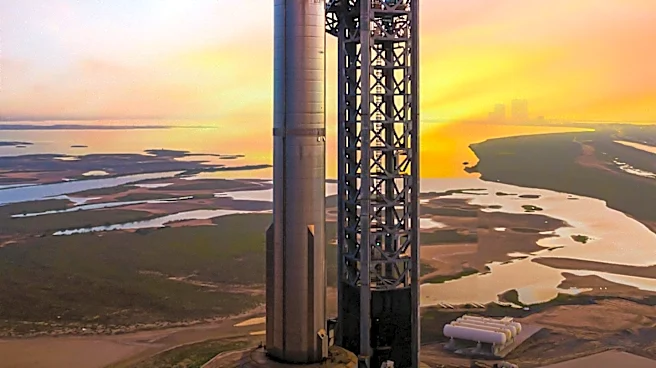
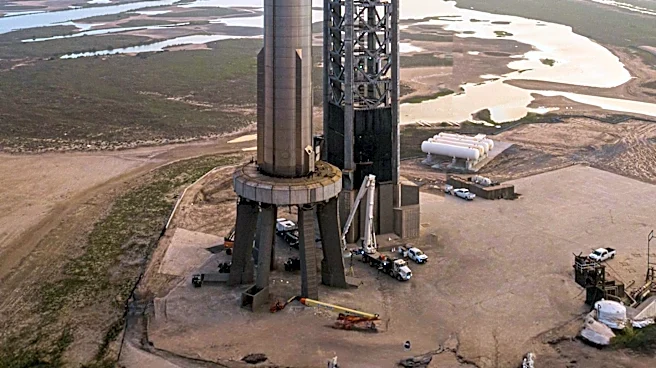
SpaceX is set to launch its thirteenth Starship flight on July 16, 2026, from its Starbase in Texas. This mission will carry 20 Starlink V3 satellites, marking the first time these advanced satellites are deployed. The launch follows Flight 12, which
faced engine failures and was declared a mishap by the Federal Aviation Administration, prompting an investigation. Flight 13 includes several hardware upgrades to address previous issues, such as improved Raptor engine reliability and a more robust stage separation process. The Starlink V3 satellites offer significantly higher capacity than their predecessors, with each satellite providing 1 terabit per second of downlink capacity.
Why It's Important?
The deployment of Starlink V3 satellites is a major advancement for SpaceX's internet network, significantly increasing the constellation's capacity and service speeds. This mission is a critical component of SpaceX's strategy to rapidly expand its Starlink network and improve global internet access. The success of this launch could also influence the timeline for future Starship missions, including its use as a lunar lander for NASA's Artemis program. The enhancements made to the Starship and its systems are essential for ensuring the reliability and success of future missions.
What's Next?
Following the success of Flight 13, SpaceX plans to continue expanding its Starlink network and advancing its Starship program. The company aims to conduct the first orbital launch of Starship, which would be a significant milestone in its space exploration efforts. SpaceX will continue to refine its technology and address any challenges that arise to ensure the success of future missions. The outcome of this mission will likely impact SpaceX's strategy and timeline for its broader goals in space exploration and internet connectivity.