




What's Happening?
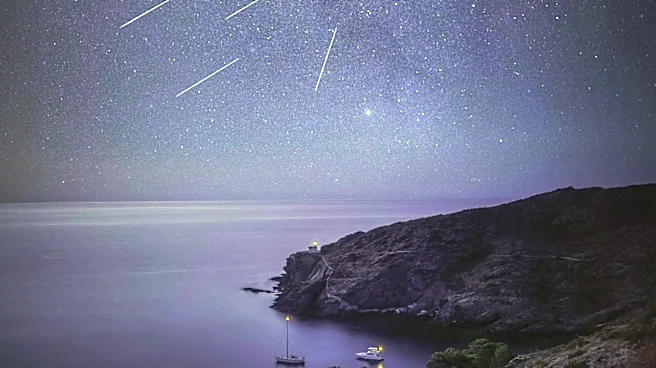
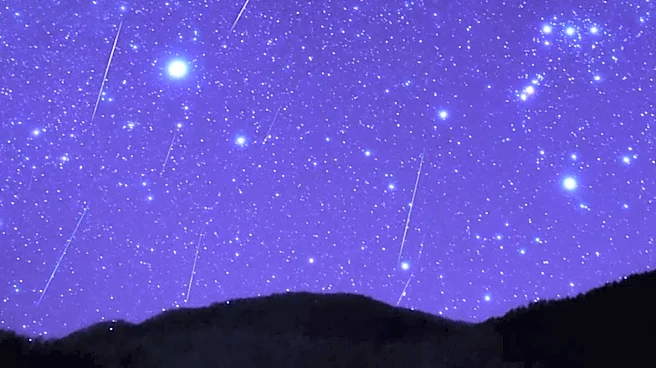
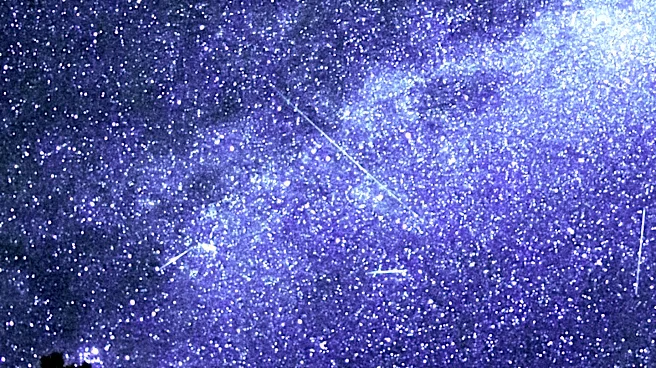
Astronomy Magazine reports on the peak of the Southern Delta Aquariids meteor shower, which is expected to occur from July 24 to 31, 2026. The meteor shower's radiant rises in the east around 9:30 P.M. local daylight time and reaches its highest point
in the south a few hours after midnight. Observers are advised to look in the sky regions 40° to 60° on either side of the Full Moon to spot meteors, as this area offers a better chance of sightings with the Moon out of direct view. Despite the bright moonlight, which can hinder visibility, the magazine suggests that any shooting stars seen will be particularly rewarding.
Why It's Important?
The Southern Delta Aquariids meteor shower is a significant astronomical event that provides an opportunity for enthusiasts and the general public to engage with the night sky. Meteor showers like this one can inspire interest in astronomy and science, fostering educational opportunities and public engagement. The event also highlights the importance of preserving dark skies, as light pollution can significantly impact the visibility of such celestial phenomena. This meteor shower serves as a reminder of the natural wonders that can be observed from Earth, encouraging efforts to reduce light pollution and protect night sky visibility.
What's Next?
As the Southern Delta Aquariids meteor shower peaks, observers are encouraged to find locations with minimal light pollution to maximize their chances of seeing meteors. Astronomy clubs and observatories may host viewing events, providing telescopes and guidance for those interested in learning more about the night sky. Additionally, the event may prompt discussions on the importance of dark sky preservation and the impact of light pollution on astronomical observations. Future meteor showers and celestial events will continue to offer opportunities for public engagement and education in astronomy.