




What's Happening?
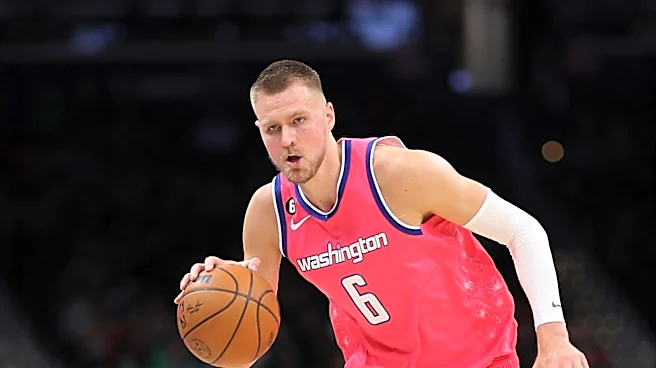
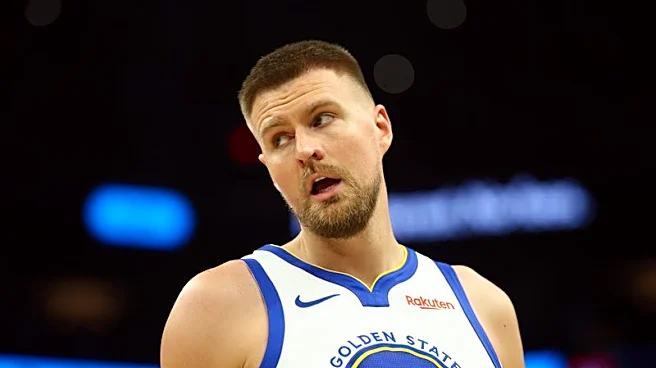
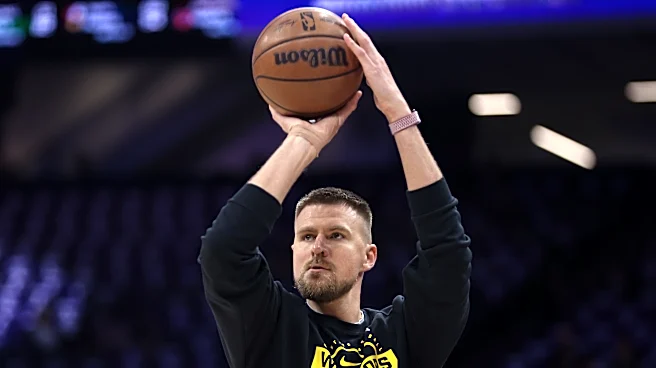
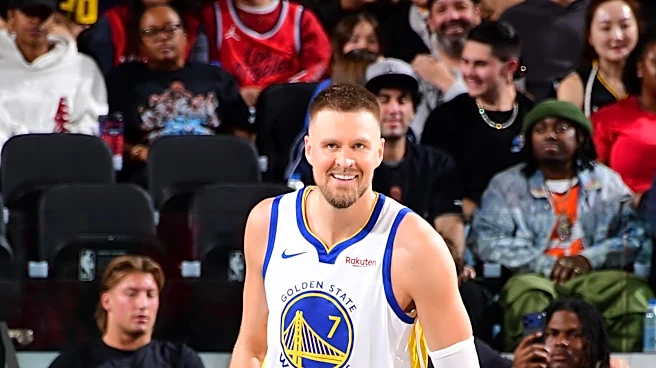
Golden State Warriors head coach Steve Kerr has publicly addressed Kristaps Porzingis' decision to step away from basketball indefinitely due to health concerns. Kerr confirmed he exchanged texts with Porzingis following the player's announcement on Friday,
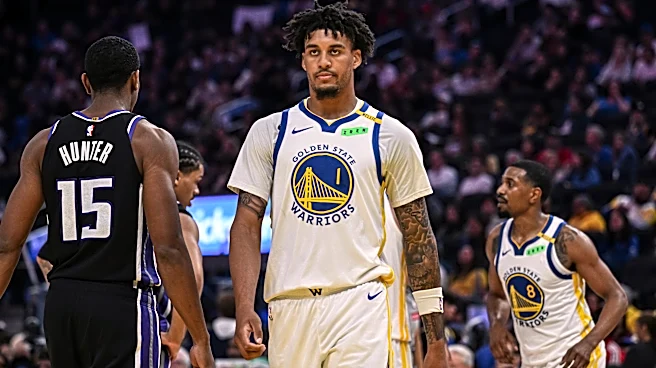
expressing well wishes and acknowledging the difficult nature of the decision. This statement marks a shift in Kerr's previous stance, where he had maintained operational distance from Porzingis' mysterious absence from training camp. Porzingis, a 7'2" center with a history of injuries and Postural Orthostatic Tachycardia Syndrome (POTS), stated his physical condition was not adequate for professional basketball. The Warriors had previously designed a 'five-out' offensive strategy around Porzingis, but recalibrated to a small-ball approach when he did not report to training camp, leading to a six-game winning streak. The team's front office had also withheld payments on Porzingis' $20 million salary for the 2026–27 season due to his absence, a move not challenged by Porzingis or the NBPA.
Why It's Important?
Porzingis' departure has significant implications for the Golden State Warriors, both strategically and financially. His absence forced a complete overhaul of the team's offensive strategy, leading to the adoption of a small-ball lineup that has unexpectedly resulted in a six-game winning streak. This demonstrates the team's adaptability and the depth of its roster, but also highlights the potential disruption a key player's sudden exit can cause. Financially, the Warriors' decision to withhold salary payments and the player's amicable response suggest a mutual understanding and a path toward a broader resolution regarding his contract. The $20 million slot for the 2027–28 season, with only $3 million guaranteed, is now viewed by rival executives as a valuable trade asset, potentially offering the Warriors flexibility to acquire new talent. This situation underscores the complex interplay between player health, team strategy, and financial management in professional sports.
What's Next?
The Golden State Warriors reportedly have no plans to void the two-year, $40 million extension Porzingis signed in late June. With only $3 million guaranteed on his contract for the 2027–28 season, his expiring $20 million slot is seen as a prime trade asset leading up to February's trade deadline. This suggests the Warriors may look to leverage this financial flexibility to strengthen their roster. Porzingis' statement indicated he is working with the team to find a solution to his contract, implying ongoing discussions about his future with the organization. The team will continue to rely on its current small-ball strategy, which has proven successful, and focus on the players who are actively contributing. The situation also raises questions about the long-term health and career prospects of players dealing with chronic conditions in the demanding environment of professional basketball.
Beyond the Headlines
The situation surrounding Kristaps Porzingis' departure from basketball highlights the often-overlooked human element in professional sports, particularly the immense pressure on athletes to perform while managing significant health challenges. Porzingis' decision to prioritize his physical health, despite the financial and career implications, underscores a growing awareness and acceptance of athletes' well-being beyond their on-court performance. The Warriors' handling of the situation, from recalibrating their strategy to the financial negotiations, reflects a pragmatic approach to unforeseen circumstances. This event could contribute to broader discussions within the NBA and other professional sports leagues about player contracts, health management, and the support systems in place for athletes facing career-altering health issues. It also subtly reinforces the idea that team success can sometimes emerge from unexpected adaptations, even in the face of significant setbacks.