


What's Happening?
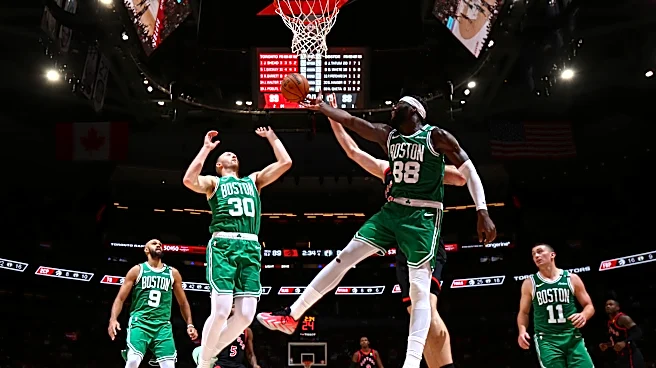
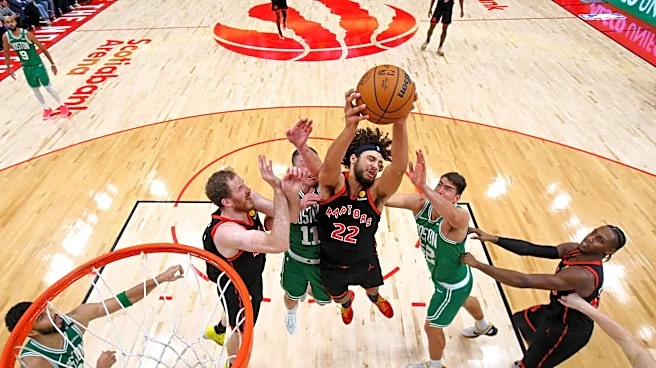
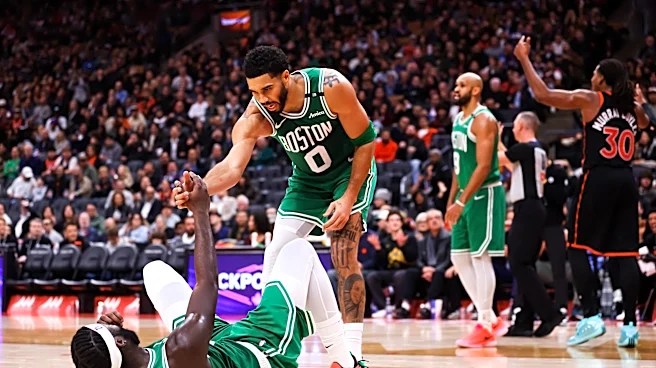
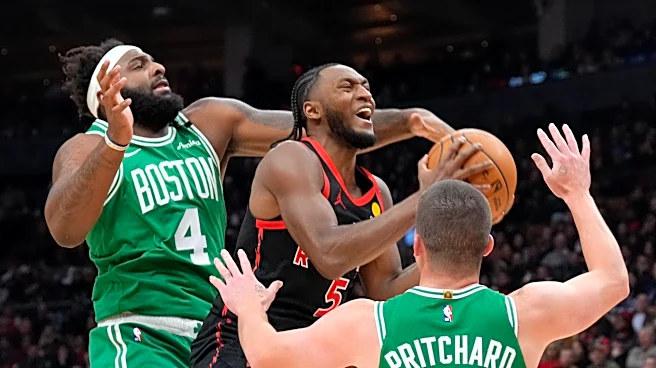
The Toronto Raptors experienced a frustrating 98-93 loss against the Boston Celtics at Scotiabank Arena. The Raptors initially built a significant lead, reaching as much as 22 points in the first half. However, they were unable to maintain this advantage,
ultimately succumbing to the Celtics, who improved their Eastern Conference best record to 10-2. The Raptors' bench players, including Allen Graves, Jamison Battle, Elijah Martin, Jamal Shead, and Kyle Anderson, performed well, all finishing with a positive plus-minus and contributing to the early lead. Elijah Martin notably made four out of five three-point attempts. Despite the strong start from the bench, the starters struggled to carry the momentum into the second half, leading to an offensive collapse where the team scored only 32 points after the first quarter's 38. The team was notably without key players Scottie Barnes and Kawhi Leonard, which significantly impacted their offensive rhythm and ability to penetrate the paint consistently.
Why It's Important?
This loss highlights the Toronto Raptors' reliance on their star players, Scottie Barnes and Kawhi Leonard, for offensive consistency and leadership. Their absence exposed vulnerabilities in the team's ability to close out games, even with substantial leads. For the NBA, this game underscores the competitive depth of the Eastern Conference, with the Celtics demonstrating their resilience and top-tier status. For the Raptors, the defeat raises questions about their depth and the capacity of complementary players to step into larger roles effectively, particularly in high-pressure situations. While the bench showed promise, the inability of the starters to sustain performance without their key offensive facilitators suggests a potential challenge for the team's overall season trajectory and playoff aspirations. The repeated pattern of blowing leads, as noted in subsequent games, could impact team morale and fan confidence.
What's Next?
The Toronto Raptors will need to address their offensive struggles and their ability to maintain leads, especially in the absence of key players like Scottie Barnes and Kawhi Leonard. The team's upcoming schedule will test their resilience and adaptability. The coaching staff will likely focus on developing strategies to ensure more consistent offensive output throughout the game and to empower other players to take on more significant roles. The return of Barnes and Leonard will be crucial for the team's performance, as their presence is seen as essential for the Raptors to compete effectively. The team's ability to integrate these players back into the lineup and find a hierarchical structure with them at the top will be a key factor in their future success and standing in the Eastern Conference.
Beyond the Headlines
The Raptors' recent struggles, particularly in games where they hold significant leads only to lose, could have broader implications for team psychology and strategic development. The reliance on star players, while common in the NBA, can create a dependency that hinders the growth of other team members. This situation presents an opportunity for the Raptors to cultivate a more robust team dynamic, where multiple players can contribute offensively and defensively, reducing the impact of individual absences. The challenge lies in balancing the development of complementary players with the need for immediate results. This period of adversity could either forge a more resilient and versatile team or expose deeper structural issues that require more significant changes in the long term.