




What's Happening?
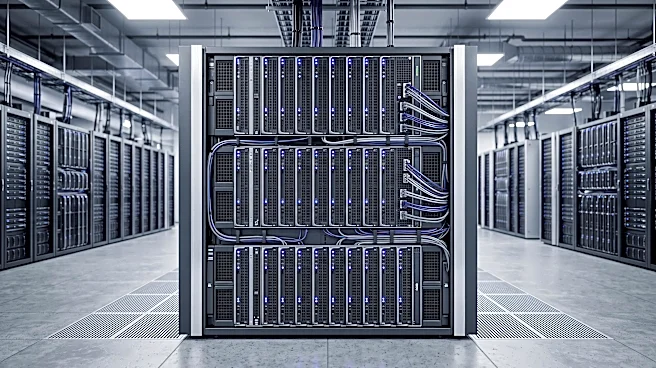
Five major U.S. 'hyperscaler' companies are projected to invest more than $1 trillion in AI infrastructure during 2027 and 2028. This significant capital expenditure (capex) is a key driver of global economic resilience, alongside government spending
on defense, domestic energy, and critical manufacturing onshoring. Despite concerns about return on investment and rising input costs, these tech builders show no signs of slowing their spending. This tech investment, primarily centered in the U.S., is increasingly benefiting Asia and Europe. The continuous flow of geopolitical news, including a war in the Middle East and rising energy costs, is prompting governments worldwide to spend on projects that enhance resilience, further contributing to the robust economic outlook. This spending trend marks a stark contrast to the austerity measures observed in the decade preceding the pandemic.
Why It's Important?
This massive investment by U.S. hyperscaler companies underscores a profound shift in economic drivers, prioritizing technological advancement and resilience. The commitment of over $1 trillion in AI infrastructure signifies a belief in the transformative power of artificial intelligence and its potential to reshape industries and economies. This spending is expected to fuel innovation, create new job opportunities, and enhance productivity across various sectors. For the U.S. economy, it reinforces its position as a global leader in technology and AI development. The substantial capital injection could also lead to increased demand for skilled labor, specialized hardware, and energy resources, impacting supply chains and related industries. Furthermore, the global reach of these investments suggests a broader economic uplift, potentially mitigating some of the economic drag from geopolitical tensions and energy price fluctuations.
What's Next?
The continued high levels of investment in AI infrastructure by U.S. hyperscalers are expected to sustain global economic growth into 2027 and 2028. This trend suggests an ongoing expansion of technological capabilities and a deepening integration of AI across various economic activities. Policymakers and businesses will likely monitor the impact of this spending on job markets, inflation, and energy demand. The interplay between corporate tech capex and government spending on resilience projects will be crucial in shaping the economic landscape. While the immediate outlook is robust, potential challenges include managing the increasing input costs for tech builders and ensuring that the benefits of AI infrastructure are broadly distributed to avoid exacerbating economic inequalities. The bond market will also play a role, as governments and hyperscalers compete for funding, potentially influencing interest rates and investment decisions.
Beyond the Headlines
The unprecedented scale of AI infrastructure investment by U.S. hyperscalers raises deeper questions about the future of work, data privacy, and ethical AI development. This technological arms race could accelerate automation, potentially displacing certain types of jobs while creating new ones requiring different skill sets. The concentration of such vast computing power in the hands of a few large corporations also brings to the forefront discussions about market dominance, regulatory oversight, and the potential for monopolistic practices. Furthermore, the energy demands of these massive AI data centers could have significant environmental implications, prompting a need for sustainable energy solutions and efficient resource management. The long-term societal impact of widespread AI integration, from its influence on daily life to its role in national security, will be a critical area of focus for policymakers and civil society alike.