






What's Happening?
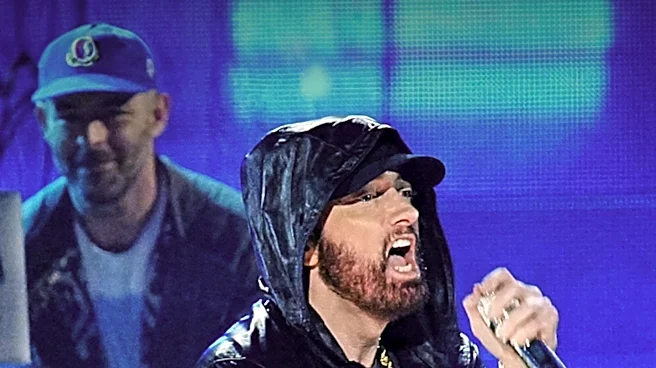
Eight Mile Style, co-publisher of Eminem's music, has amended its copyright infringement lawsuit against AI music generator Suno. The updated complaint, filed on November 19 in the US District Court for the Northern District of California, adds 108 new
AI-generated tracks that allegedly infringe upon its copyrighted songs. These new examples pertain to 26 of the 269 compositions originally cited in the case, including well-known tracks like 'Lose Yourself,' 'Stan,' 'Mockingbird,' and 'Without Me.' Despite the addition of more alleged infringements, the total damages sought by Eight Mile Style remain unchanged at over $47.7 million across its three claims. The amended filing directly challenges Suno's public statements made after the initial lawsuit, where Suno claimed it does not 'trade on anyone’s name or likeness' and 'do[es] not allow prompts for specific artists’ names and songs.' Eight Mile Style asserts these statements are 'demonstrably false,' presenting the new examples as evidence that Suno-generated outputs use copyrighted lyrics, often verbatim, and musical elements, frequently in Eminem's voice.
Why It's Important?
This amended lawsuit intensifies the ongoing legal battle between music rights holders and AI music generation companies, highlighting critical issues surrounding copyright in the age of artificial intelligence. The case could set a significant precedent for how AI models are trained and how they generate content, particularly concerning the use of existing copyrighted material. If Eight Mile Style prevails, it could force AI music generators like Suno to implement more stringent safeguards against infringement, potentially leading to higher licensing costs or restrictions on their creative outputs. The lawsuit also underscores the music industry's growing concern over unauthorized use of artists' intellectual property, including their voices and lyrical content, for AI training and generation. The outcome will likely influence future licensing agreements and legal frameworks for AI in creative industries, impacting both technology developers and content creators.
What's Next?
The allegations made by Eight Mile Style in both the original and amended complaints have yet to be tested in court. Suno will likely continue to defend its position, potentially arguing that its AI models do not directly copy but rather generate new, original music inspired by various styles. The legal proceedings will involve discovery phases, where both parties will exchange evidence, including Suno's internal data on its AI training and generation processes. A key aspect will be whether the court finds Suno's alleged infringements to be willful, which would significantly impact the potential damages awarded. Beyond this specific case, the broader legal landscape for AI and copyright is still evolving, with other lawsuits from major music entities like Universal Music Group and Sony Music also pending against Suno. The industry will closely watch these developments for any indications of how courts will interpret existing copyright law in the context of AI-generated content.
Beyond the Headlines
The legal dispute between Eight Mile Style and Suno delves into the complex ethical and technological questions surrounding AI's role in creative fields. The claim that Suno 'stole without care, Eminem’s likeness, including his voice' raises questions about the scope of copyright protection beyond just musical compositions to include an artist's unique vocal characteristics. While the amended complaint does not add a specific claim over Eminem's voice or likeness, the language used reflects a growing concern among artists about the unauthorized replication of their unique artistic identities by AI. This case, alongside others, could prompt legislative action to clarify intellectual property rights in the AI era, potentially leading to new laws or amendments to existing ones that specifically address AI training data, output originality, and the protection of an artist's persona. The outcome could shape the future of AI-human collaboration in music, influencing how artists are compensated and how their creative contributions are recognized and protected.