







What's Happening?
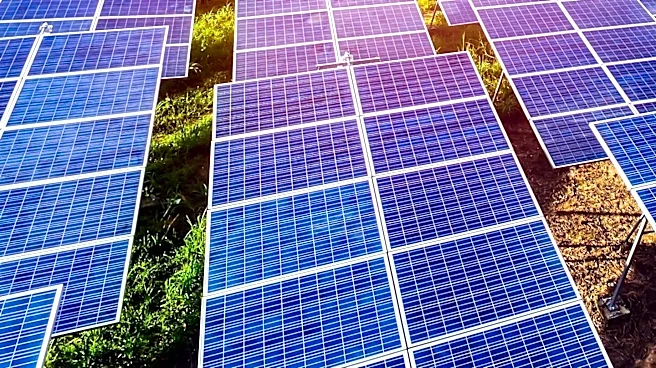
Solar customers in California, particularly those under the Net Billing Tariff (NEM 3.0), are experiencing higher electricity bills due to the annual 'true-up' process. This process reconciles a year of charges against export credits earned by solar energy
systems. While monthly bills under SCE's Solar Billing Plan already net charges against Energy Export Credits, the true-up serves as a final reconciliation. Leftover credits are not refunded, though a net surplus may earn Net Surplus Compensation at a wholesale rate. The value of export credits under NEM 3.0 is determined by the California Public Utilities Commission's (CPUC) Avoided Cost Calculator, which models the costs the grid avoids when solar energy is supplied. This means credits vary by hour, month, and time of day, with late-summer evening exports being more valuable than midday ones. This system results in significantly less earned per exported kilowatt-hour compared to the previous NEM 2.0, making battery storage more crucial for optimizing savings. Investor-owned utilities like SCE, PG&E, and SDG&E operate under these CPUC-regulated tariffs, while municipal utilities like LADWP have their own billing rules and are not on NEM 3.0.
Why It's Important?
The shift to NEM 3.0 and its impact on the true-up process is significantly altering the financial landscape for solar energy users in California. Homeowners who invested in solar panels under previous net metering rules, expecting substantial savings, may now find their anticipated benefits reduced. This change could deter future solar adoption, impacting California's renewable energy goals and the solar industry's growth within the state. The emphasis on the Avoided Cost Calculator means that the value of exported solar energy is no longer tied to retail rates, but rather to the grid's needs at specific times. This necessitates a more strategic approach to energy consumption and storage for solar customers to maximize their savings. The differing rules between investor-owned and municipal utilities also create an uneven playing field, potentially leading to confusion and inequity among residents depending on their utility provider. This situation highlights the ongoing challenge of balancing grid stability, utility costs, and the promotion of renewable energy sources.
What's Next?
Solar customers in California will need to adapt their energy consumption habits and potentially invest in energy storage solutions, such as batteries, to mitigate the impact of higher true-up bills under NEM 3.0. The CPUC's framework encourages the use of solar production within the home or storing it for later use during high-value evening hours, rather than relying on exporting excess energy to the grid for significant credits. Utilities are likely to continue offering tools and programs to help customers understand and manage their energy use under the new billing structures. For instance, NV Energy, in a similar context, provides web tools and 'Power Shift' options to help customers identify peak demand periods and make cost-saving adjustments. The long-term implications for solar adoption in California will depend on how effectively customers can adapt to these changes and whether new incentives or technologies emerge to offset the reduced export credit values.
Beyond the Headlines
The changes in California's solar billing, particularly the true-up process under NEM 3.0, reflect a broader national trend of utilities and regulators grappling with the integration of distributed renewable energy sources into existing grid infrastructure. While the goal is often to ensure grid stability and fair cost allocation among all customers, these adjustments can create financial challenges for early adopters of solar technology. This situation raises questions about the long-term economic viability of residential solar without significant battery storage, potentially shifting the burden of grid modernization onto individual homeowners. It also underscores the complex interplay between state regulations, utility business models, and consumer incentives in shaping the future of renewable energy. The ethical dimension of changing rules for existing solar customers, who made significant investments based on prior policies, is also a point of contention, highlighting the need for clear, stable, and equitable energy policies.