





What's Happening?
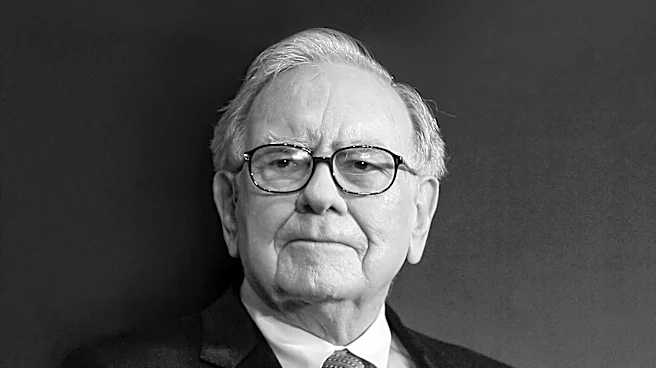
Warren Buffett, the former CEO of Berkshire Hathaway, advocates a three-step investment approach: identifying quality companies, purchasing their stocks at attractive prices, and holding them for the long term. This strategy, while seemingly straightforward,
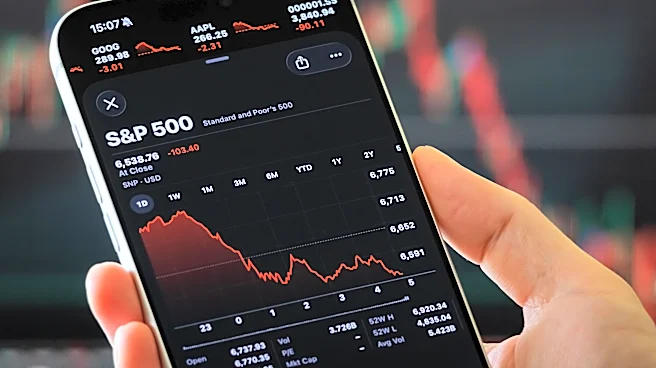
presents significant challenges, particularly the discipline required to hold investments during market downturns. Buffett's method is adaptable across various investment styles, including growth, value, and income investing. The core idea is to benefit from the sustained growth of businesses over time, rather than engaging in frequent trading. The S&P 500 index serves as a historical example, demonstrating consistent recovery and new record highs after numerous bear markets, such as the dot-com crash, the Great Recession, and the COVID-19 pandemic. This historical performance reinforces the efficacy of a long-term holding strategy, even for those who opt for broad market index funds like the Vanguard S&P 500 ETF.
Why It's Important?
This investment philosophy is crucial for individual investors and financial institutions alike, as it underscores the importance of patience and resilience in wealth creation. In an investment landscape often driven by short-term gains and market volatility, Buffett's approach provides a counter-narrative that prioritizes fundamental business value and long-term growth. For U.S. investors, understanding this strategy can mitigate the emotional pitfalls of market fluctuations, such as the 'fear of missing out' (FOMO) during bull markets or panic selling during bear markets. By focusing on holding quality assets, investors can potentially avoid significant losses incurred by reactive trading and instead capitalize on the compounding effect of long-term growth. This perspective is particularly relevant in periods of economic uncertainty, offering a stable framework for investment decisions.
What's Next?
As market cycles continue, investors will repeatedly face the challenge of adhering to a long-term holding strategy. The next bear market, whenever it occurs, will test the resolve of those who adopt Buffett's principles. Financial advisors and investment platforms are likely to continue promoting diversified portfolios and long-term strategies, often referencing Buffett's success. Individual investors may increasingly seek educational resources and tools that help them maintain discipline during volatile periods. Furthermore, the performance of broad market indices like the S&P 500 will remain a key indicator for the effectiveness of this patient investment approach, influencing both retail and institutional investment behaviors in the coming years.
Beyond the Headlines
The deeper implication of Buffett's strategy extends beyond mere financial returns; it speaks to a broader psychological discipline required in decision-making under uncertainty. The difficulty of 'doing nothing' in the face of market noise highlights the human tendency towards action, even when inaction is the more rational choice. This investment philosophy also subtly critiques the high-frequency trading and speculative behaviors prevalent in modern financial markets, advocating for a more grounded, business-owner mindset. Ethically, it promotes a form of capitalism focused on sustainable business growth rather than short-term financial engineering. Culturally, it reinforces the value of patience and foresight, qualities that are often overlooked in a fast-paced, instant-gratification society, offering a timeless lesson applicable to various aspects of life beyond investing.