



What's Happening?
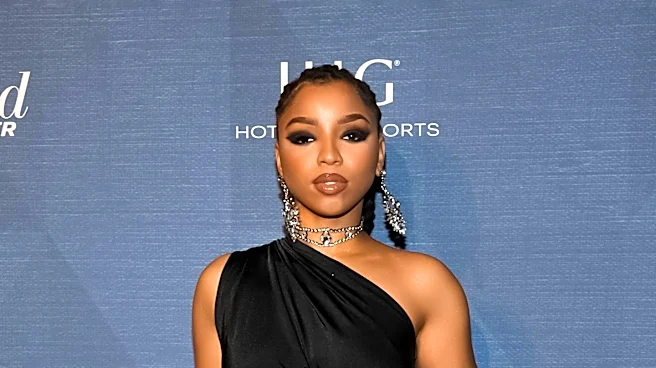
Grammy-nominated singer and actress Chlöe Bailey has recently been subjected to intense online criticism following a bare-faced video she posted. This incident is part of a larger pattern of online negativity she has faced for years, with internet users
dissecting her appearance, body, and career choices. Bailey has begun to respond to these comments, pushing back against the expectation that celebrities should ignore constant insults. Her peers, such as Stella Quaresma from the group FLO, have also come to her defense, highlighting the disproportionate pressure placed on artists, particularly young Black women, to be flawless. The discourse surrounding Bailey's career has often focused on perceived failures, such as the commercial performance of her debut album, 'In Pieces,' rather than her artistic development. This trend extends to other artists like Normani and FLO, who have also experienced significant online scrutiny and unrealistic expectations regarding their artistic journeys and personal lives.
Why It's Important?
This situation underscores the detrimental impact of social media on the creative development and mental well-being of artists, especially young Black women in the entertainment industry. The constant public scrutiny and immediate judgment on platforms like X (formerly Twitter) create an environment where experimentation and growth are stifled. Artists are expected to achieve immediate, massive success and are often labeled 'flops' if their projects don't meet unrealistic commercial expectations. This lack of patience for artistic evolution, coupled with personal attacks on appearance and perceived failures, can be deeply damaging. The article argues that if social media had existed in its current form in earlier eras, many legendary artists might not have survived their initial career stages due to the relentless negativity. This phenomenon highlights a broader societal issue where online spaces normalize cruelty and blur the line between constructive criticism and personal attacks, making it difficult for artists to navigate their careers authentically and without fear of constant backlash.
What's Next?
The ongoing trend of artists like Chlöe Bailey engaging directly with online critics suggests a potential shift in how public figures manage their digital presence and mental health. While some advocate for ignoring negative comments, the increasing number of artists choosing to clap back or address the negativity directly indicates a growing refusal to passively accept online abuse. This could lead to more open discussions about the psychological toll of social media on public figures and potentially influence platforms to implement stricter measures against harassment. Furthermore, the continued support from peers within the industry, as seen with FLO defending Bailey, might foster a stronger sense of community among artists facing similar challenges. This collective response could empower more artists to speak out and advocate for healthier online environments, potentially leading to a re-evaluation of how audiences interact with and judge creative work.
Beyond the Headlines
The intense online scrutiny faced by Chlöe Bailey and other Black women artists reveals deeper societal biases and expectations. There's an implicit demand for Black women to be 'flawless' to receive support and respect, and any display of confidence or sensuality is often met with disproportionate criticism or deemed 'uncomfortable.' This double standard is evident in how their self-assurance is interpreted as arrogance, and their artistic evolution is often compared to established legends rather than appreciated for its unique qualities. The internet's tendency to reduce artists to a single moment or perceived failure, rather than acknowledging their journey and humanity, reflects a broader cultural issue of instant gratification and a lack of empathy. This environment not only impacts individual artists but also shapes the landscape of creative expression, potentially discouraging diverse voices from emerging or experimenting for fear of public backlash. The blurring of lines between criticism and cruelty online has significant ethical implications for digital citizenship and the responsibility of online communities.