



What's Happening?
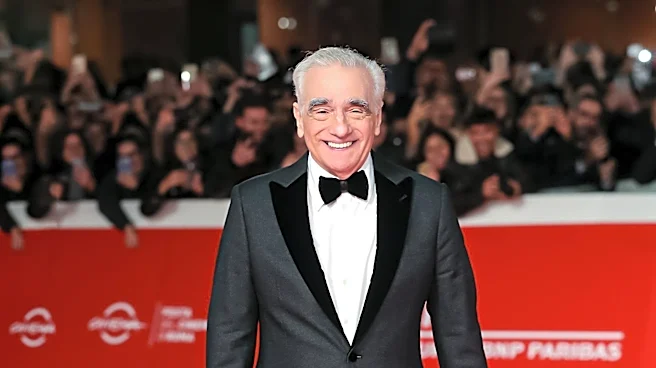
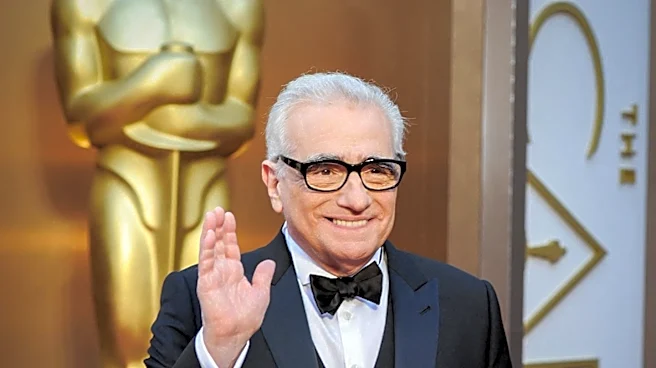
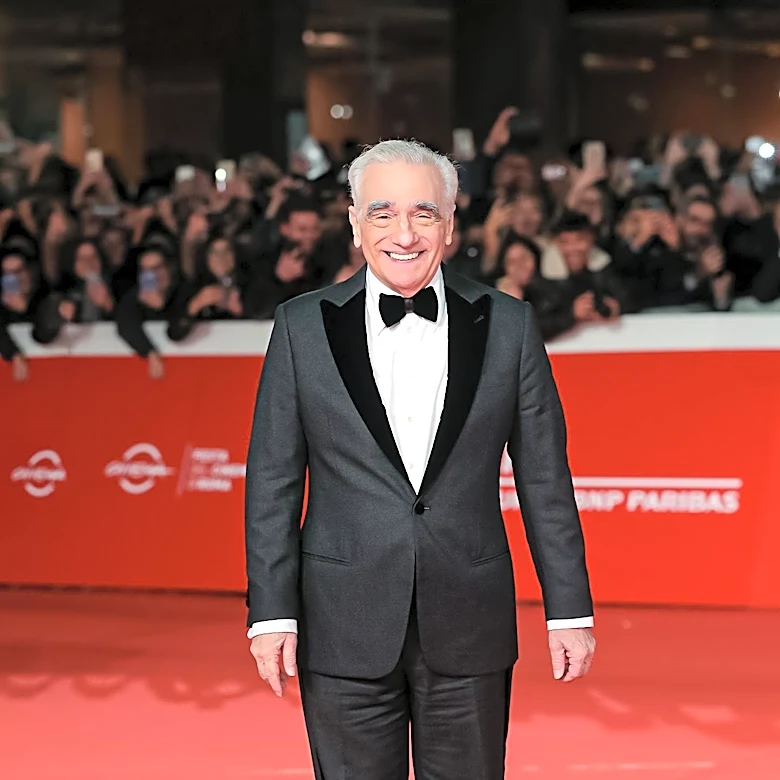
Renowned filmmaker Martin Scorsese continues to defend the 1980 movie 'Heaven's Gate,' despite its catastrophic box office failure and widespread critical panning. The film, directed by Michael Cimino, was an ambitious production with a budget of approximately
$44 million, which was substantial for its time. It grossed only $3.5 million, leading to significant financial repercussions for United Artists, which was subsequently sold by Transamerica to MGM. Accusations of on-set animal abuse further marred its reputation. Scorsese acknowledges the film's disastrous impact on the industry, noting that it contributed to a shift away from the auteur-driven filmmaking model prevalent in New Hollywood. However, he maintains that the film contains 'wonderful things' and 'amazing things,' praising its detail, authenticity, and staging as 'phenomenal.'
Why It's Important?
The defense of 'Heaven's Gate' by a director of Martin Scorsese's stature highlights a persistent tension in the film industry between artistic vision and commercial viability. The film's failure was a pivotal moment, signaling the end of an era where directors were given extensive creative control and large budgets without stringent oversight. This shift had a profound impact on how films were financed and produced in Hollywood, leading to a more studio-controlled model focused on profitability. Scorsese's continued admiration for the film underscores the value some artists place on creative ambition and execution, even when it doesn't translate to commercial success. It also serves as a reminder of the risks involved in large-scale productions and the delicate balance required to satisfy both artistic integrity and financial stakeholders.
What's Next?
While 'Heaven's Gate' remains a historical case study, Scorsese's comments could reignite discussions about the film's artistic merits and its place in cinematic history. It may encourage film scholars and enthusiasts to re-evaluate the movie, potentially leading to renewed interest in its themes and technical achievements. For the broader film industry, this ongoing debate reinforces the cyclical nature of artistic freedom versus commercial pressures. Future productions will continue to grapple with these challenges, with studios seeking to mitigate financial risks while directors strive for creative expression. Scorsese's perspective might also influence emerging filmmakers to pursue ambitious projects, even in the face of potential commercial hurdles, by emphasizing the long-term artistic legacy over immediate box office returns.
Beyond the Headlines
Scorsese's unwavering support for 'Heaven's Gate' delves into deeper questions about the nature of artistic judgment and the legacy of films. It challenges the notion that commercial success is the sole determinant of a film's value. The film's initial reception was heavily influenced by its financial failure and production controversies, overshadowing its artistic components. Scorsese's perspective suggests that a film's true worth might only be fully appreciated years later, once the immediate pressures and biases have faded. This situation also touches upon the 'auteur theory,' where the director's vision is paramount, and the consequences when that vision clashes with industry expectations. It prompts reflection on how critical consensus is formed and whether certain films are unfairly judged based on factors external to their artistic content.