





What's Happening?
Rick Allen, the drummer for the British rock band Def Leppard, famously lost his left arm in a car accident on New Year's Eve in 1984. Despite this life-altering injury, Allen continued his career with the band. Instead of replacing him, Def Leppard paused
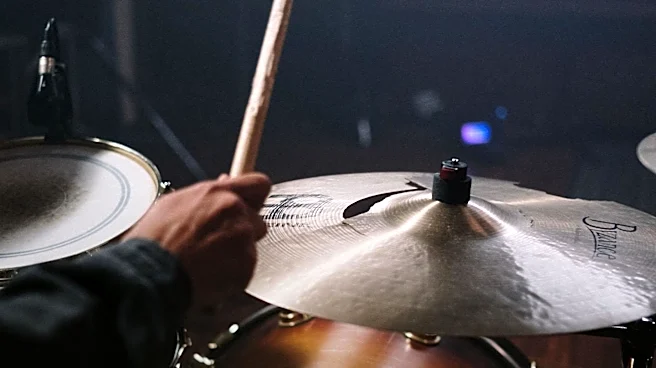
and supported Allen's recovery. He collaborated with electronic drum manufacturers to develop a custom, semi-electronic drum kit. This innovative setup allows him to play backbeats using his left foot, effectively replicating the snare drum and tom-tom sounds he would traditionally produce with his left arm. This adaptation enabled him to maintain a powerful and steady rhythm, combining both acoustic and electronic percussion. His resilience was notably showcased during his comeback performance at the Monsters of Rock festival in 1986, solidifying his place in the band and in music history.
Why It's Important?
Rick Allen's story is a significant testament to human resilience and adaptation within the music industry. His ability to overcome a severe physical disability and continue performing at a high level with Def Leppard set a powerful precedent. This event not only solidified the band's internal bond and loyalty but also inspired countless individuals facing similar challenges. From a technological standpoint, Allen's custom electronic drum kit pushed the boundaries of musical instrument design, demonstrating how technology can be harnessed to enable artists to continue their craft despite physical limitations. His continued success challenged conventional notions of what a drummer needs to perform, influencing both adaptive technology in music and perceptions of disability in professional fields. The band's decision to support him rather than replace him also highlights a profound commitment to their members, fostering a unique narrative of perseverance in the often-cutthroat world of rock music.
What's Next?
Rick Allen continues to perform with Def Leppard, maintaining his role as the band's drummer. His custom electronic drum kit remains an integral part of his setup, allowing him to contribute to the band's live performances and studio recordings. The band frequently tours, often headlining stadiums with other iconic groups, and Allen's drumming is a consistent feature of these shows. His story continues to be a source of inspiration, and he occasionally participates in events or interviews where he shares his experiences and discusses his adaptive drumming techniques. The ongoing use and evolution of his custom kit may also continue to influence developments in adaptive musical instruments, potentially inspiring new technologies for musicians with disabilities.
Beyond the Headlines
Rick Allen's journey extends beyond a mere comeback; it represents a profound shift in how disability is perceived within high-performance professions like music. His success challenged the notion that a physical limitation must end a career, instead demonstrating that innovation and determination can create new pathways. Ethically, the band's unwavering support for Allen underscored the importance of loyalty and human value over immediate commercial expediency, a rare narrative in the entertainment industry. Culturally, Allen became an icon of perseverance, his story resonating with audiences far beyond Def Leppard's fanbase. His experience also highlights the potential for technology to serve as an equalizer, enabling individuals to transcend physical barriers and continue pursuing their passions, thereby fostering greater inclusivity in creative fields. This long-term impact on perceptions of disability and the role of adaptive technology continues to be a significant part of his legacy.