




What's Happening?
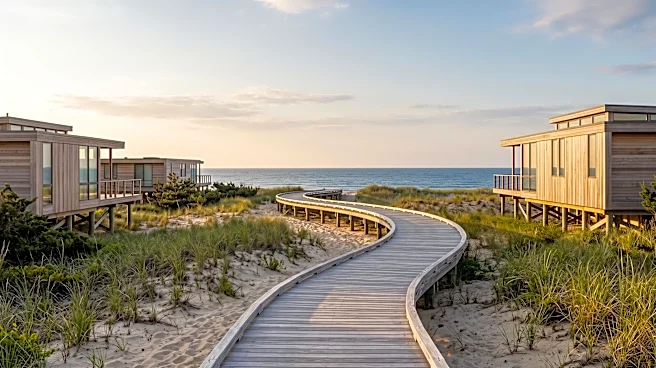
Fire Island Pines, a historically significant gay enclave, recently hosted the 'Doll Invasion,' a trans-focused event spanning a weekend of activities. This event, now in its fourth year, aims to integrate trans women into the social and sexual spaces
traditionally dominated by gay men in the Pines. Organized in part to support the non-profit Queer|Art, Doll Invasion has moved from private homes to more public venues, signaling a shift in its impact and visibility. Activist and DJ Chelsea Manning noted the historical absence of trans people on the island, highlighting that the area's infrastructure and social dynamics were largely built around the desires of gay men. The event seeks to create a necessary friction, challenging established social rhythms and fostering a more inclusive community within Fire Island Pines.
Why It's Important?
The 'Doll Invasion' event is significant as it represents a deliberate effort to diversify and redefine the social landscape of Fire Island Pines, a location deeply embedded in U.S. gay culture. By actively integrating trans women into these spaces, the event challenges long-standing norms and power structures within the LGBTQ+ community itself. This initiative highlights the evolving understanding of queer identity and community, pushing for greater inclusivity beyond traditional gay male-centric narratives. The shift from private gatherings to public spaces for the event underscores a growing demand for visibility and acceptance for trans individuals in prominent queer social settings. This movement could influence other historically exclusive LGBTQ+ spaces across the U.S. to re-evaluate their inclusivity and adapt to the broader spectrum of queer identities.
What's Next?
The continued evolution of events like 'Doll Invasion' suggests a future where Fire Island Pines, and potentially other similar enclaves, will become more diverse and inclusive. Organizers and participants anticipate that the event will continue to reshape the hearts and habits of the existing community, fostering greater understanding and acceptance. The move to more public spaces indicates a desire for broader engagement and a more permanent integration of trans individuals into the island's social fabric. Future iterations of 'Doll Invasion' are likely to build on this momentum, potentially leading to more formalized programs, increased advocacy for trans rights within these communities, and a sustained effort to challenge and transform traditional queer spaces. The ongoing dialogue and community building initiated by such events could serve as a model for other regions grappling with similar issues of inclusivity.
Beyond the Headlines
Beyond the immediate social impact, 'Doll Invasion' touches upon deeper ethical and cultural dimensions within the broader LGBTQ+ movement. It highlights the internal complexities and sometimes overlooked hierarchies within queer communities, particularly concerning the historical dominance of cisgender gay men in certain spaces. The event prompts a re-examination of what constitutes 'queer community' and who is centered within it. It also underscores the importance of intersectionality, recognizing that different queer identities face unique challenges and require specific forms of advocacy and inclusion. This initiative could catalyze a broader cultural shift, encouraging more nuanced conversations about privilege, representation, and the ongoing work required to build truly equitable and inclusive spaces for all members of the LGBTQ+ spectrum across the U.S.