




What's Happening?
Mid-century fireplace designs are experiencing a resurgence in contemporary home interiors, with designers noting their timeless appeal and unique character. Unlike the streamlined, often overlooked fireplaces of recent years, mid-century designs emphasized
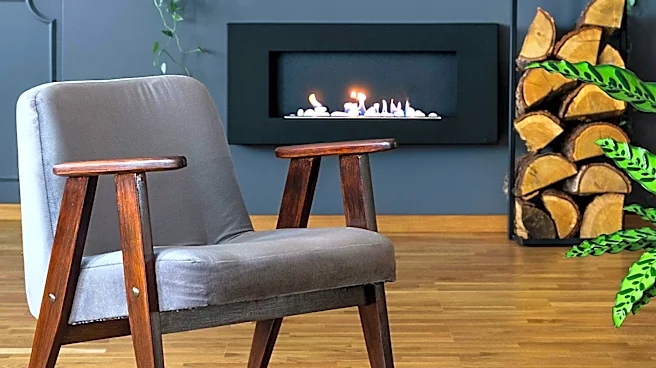
texture, dimension, and drama, serving as architectural focal points within a room. For instance, a 1964 home in Knoxville, Tennessee, maintained its original Tennessee marble fireplaces, which designers preserved and complemented with period-appropriate furniture like an Eames lounge chair. Another example highlights a wood-clad fireplace that wraps around a corner, providing both modern aesthetics and a retro feel, while a Californian cabin features a fireplace surrounded by a large tiled wall, drawing inspiration from rugged modernism and natural materials. These designs are celebrated for their clean, simplistic nature, refined lines, and ability to create a sense of tranquility and visual interest, contrasting with the minimalist trends of the 2010s.
Why It's Important?
The renewed interest in mid-century fireplace designs signifies a shift in U.S. interior design trends, moving away from stark minimalism towards more character-driven and architecturally significant home features. This trend impacts the home renovation and interior design industries, potentially increasing demand for skilled artisans capable of working with traditional materials and designs. Homeowners and real estate developers might find value in incorporating or preserving these elements, as they can enhance property aesthetics and market appeal. The emphasis on craftsmanship and unique design also suggests a broader consumer preference for authenticity and individuality in living spaces, which could influence manufacturing and retail sectors related to home furnishings and building materials. This movement also highlights the enduring influence of historical design periods on contemporary tastes.
Beyond the Headlines
The re-emergence of mid-century fireplace designs reflects a deeper cultural appreciation for historical aesthetics and craftsmanship in an era often dominated by mass-produced, minimalist styles. This trend could be seen as a form of 'slow design,' where longevity, quality, and character are prioritized over fleeting trends. It also raises questions about sustainability in design, as preserving and restoring existing architectural features can be more environmentally friendly than constant demolition and new construction. Furthermore, the focus on fireplaces as central gathering points in homes speaks to a desire for warmth, comfort, and communal spaces, potentially influenced by societal shifts towards more home-centric lifestyles. This movement may encourage a re-evaluation of what constitutes 'modern' design, suggesting that true modernity can incorporate elements of the past to create spaces that are both functional and rich in narrative.