
What's Happening?
A randomized controlled trial investigated the effectiveness of ice massage, percussive massage (using massage guns), and a combined approach versus passive recovery on calf muscle-tendon recovery in recreational
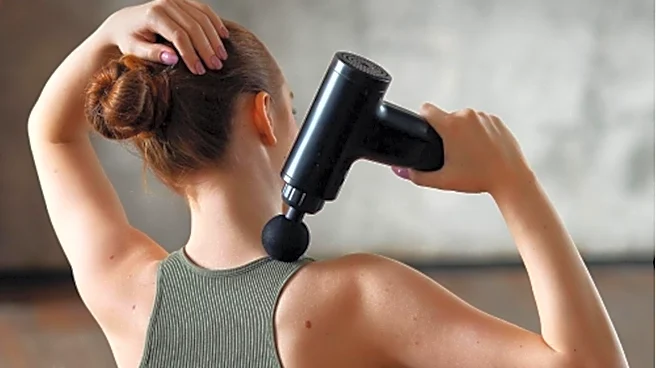
runners. The study tracked muscle soreness, jumping performance (Reactive Strength Index - RSI), and calf and Achilles tendon stiffness over 72 hours following strenuous eccentric calf exercise. Eighty recreational runners were divided into four groups: ice massage, percussive massage, combined recovery, and passive recovery. Active treatments were applied twice daily for 72 hours. Results indicated that all active interventions—ice massage, percussive massage, and combined recovery—led to more favorable 72-hour changes in reactive strength, muscle-tendon stiffness, soreness, and perceived recovery compared to passive rest. The combined treatment group showed the largest improvement in reactive strength, though this finding was based on exploratory comparisons. Differences in lactate dehydrogenase (LDH) activity, an indicator of cellular stress, were not sustained at 72 hours across the groups.
Why It's Important?
This study provides valuable insights for recreational runners and the broader sports recovery industry in the U.S. By directly comparing common recovery modalities, it helps inform athletes and trainers about potentially effective strategies for post-exercise recovery. The findings suggest that active interventions like ice massage and percussive massage can accelerate recovery metrics such as reduced soreness and improved muscle function compared to simply resting. This could influence training protocols and recovery routines for athletes, potentially leading to quicker return to performance and reduced risk of discomfort. For businesses manufacturing recovery tools, the study supports the utility of massage guns and other percussive devices, reinforcing their market position. However, the nuanced results, particularly regarding the exploratory nature of the combined treatment's superior RSI improvement, highlight the need for athletes and practitioners to consider specific recovery goals when choosing a method.
What's Next?
Future research is needed to further clarify the clinical significance of these findings and to determine optimal application parameters for each recovery modality. The study's use of controlled calf raises rather than actual running suggests that further investigation into recovery after typical training or competition is warranted. Larger, longer-term studies with sham-controlled comparisons would provide more definitive evidence regarding tissue repair, injury prevention, and the superiority of combined treatments. Athletes and trainers may begin to experiment with combined recovery protocols, but personalized approaches based on individual response and specific athletic demands will remain crucial. Manufacturers of massage guns and other recovery devices may leverage these findings in their marketing, while also being encouraged to support further research to validate specific claims and refine product development.
Beyond the Headlines
This research contributes to the ongoing debate and evolving understanding of post-exercise recovery, moving beyond anecdotal evidence to more structured scientific inquiry. It underscores the complexity of recovery, where multiple physiological markers respond differently to various interventions. The study also highlights the challenge of translating laboratory findings to real-world athletic performance and injury prevention. Ethically, it reinforces the importance of evidence-based practices in sports medicine and athletic training, urging practitioners to critically evaluate recovery trends. Culturally, the continuous search for optimal recovery methods reflects a high-performance mindset prevalent in sports, where every marginal gain is sought. This also fuels the market for recovery products, emphasizing the intersection of science, commerce, and athletic pursuit in the U.S. sports landscape.