







What's Happening?
The construction industry is increasingly shifting from project-by-project decision-making to standardized operational systems. This change is driven by persistent challenges such as labor constraints, compressed schedules, margin pressure, and growing
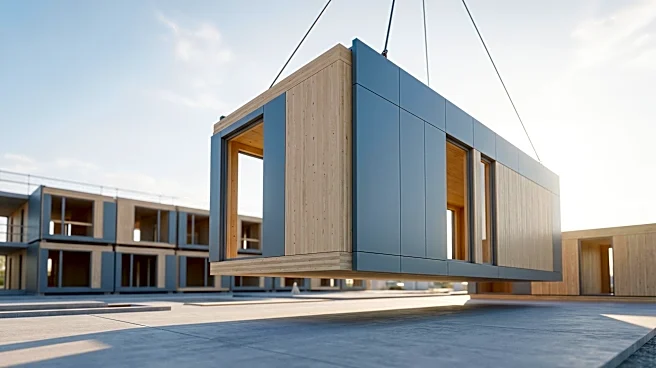
project complexity. Leading contractors are standardizing various operational aspects, including procurement, prefabrication, Building Information Modeling (BIM), safety programs, shared services, and equipment management. This strategic move aims to reduce variability and deliver more predictable business outcomes across projects, teams, and regions. A new Executive Brief from STARC highlights this accelerating trend and suggests that temporary containment systems may be the next area for enterprise-level standardization.
Why It's Important?
This shift is crucial for the U.S. construction industry as it directly addresses inefficiencies and risks that impact profitability and project delivery. By standardizing operations, companies can mitigate the financial and operational consequences of inconsistent practices. Reduced variability leads to more predictable project timelines and costs, which can improve client satisfaction and strengthen competitive positioning. Furthermore, the adoption of repeatable systems can enhance safety, optimize resource allocation, and foster innovation by providing a stable foundation for continuous improvement. This approach benefits contractors by improving their bottom line and clients by ensuring more reliable project execution, ultimately contributing to the stability and growth of the construction sector.
What's Next?
The trend towards standardization is expected to continue, with more contractors likely to evaluate and implement repeatable operating models across their portfolios. The Executive Brief suggests that temporary containment could be the next system to be standardized at an enterprise level, indicating a broader application of this strategy. Industry stakeholders, including technology providers and consultants, will likely focus on developing and promoting solutions that facilitate this standardization. The long-term impact could include a more resilient and efficient construction industry, better equipped to handle economic fluctuations and increasing project demands. Companies that embrace this shift early may gain a significant competitive advantage.
Beyond the Headlines
Beyond the immediate operational benefits, this move towards standardization reflects a deeper evolution in the construction industry's approach to risk management and quality control. It signifies a maturation from ad-hoc problem-solving to a more systematic, data-driven methodology. This cultural shift could foster greater collaboration within the industry, as best practices become more widely adopted and shared. It also has implications for workforce development, as standardized processes may require new skill sets and training programs. Ultimately, this strategic pivot could redefine industry benchmarks for efficiency, safety, and project success, influencing regulatory frameworks and insurance practices in the long run.