









What's Happening?
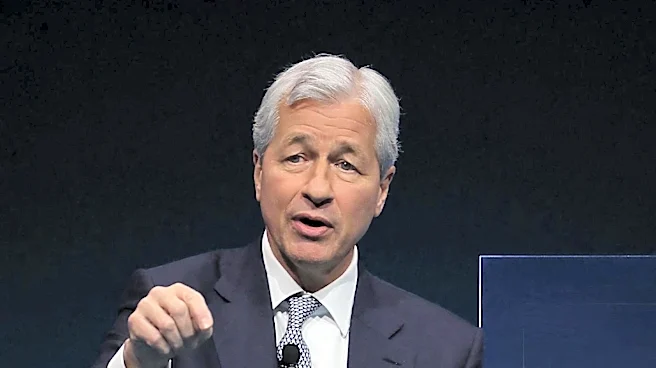
Jamie Dimon, CEO of JPMorgan Chase, has expressed concerns that investors are underestimating significant geopolitical and fiscal risks that could impact global markets. In a recent interview, Dimon highlighted ongoing conflicts in Ukraine and the Middle
East, as well as rising tensions between the U.S. and China, as key areas of concern. He also pointed to increased military spending and growing government deficits as additional factors that could destabilize markets. Dimon stated that he would not currently invest in equities or long-dated U.S. Treasurys, suggesting that these risks are not fully reflected in current asset prices. His comments come despite a strong performance by the S&P 500 this year, driven by consumer spending, moderated inflation, and interest in artificial intelligence.
Why It's Important?
Dimon's warning is significant as it comes from the leader of the world's largest bank by market capitalization, indicating a potential reevaluation of market stability. His cautionary stance suggests that investors may need to reassess their risk exposure in light of geopolitical tensions and fiscal challenges. The potential underestimation of these risks could lead to market volatility if geopolitical or fiscal conditions worsen. This perspective contrasts with the current market optimism, which has seen strong returns despite global uncertainties. Dimon's insights could influence investor behavior, potentially leading to more conservative investment strategies and a reevaluation of asset valuations.
What's Next?
Investors and market analysts may begin to closely monitor geopolitical developments and fiscal policies to better assess their potential impact on markets. Dimon's comments could prompt a shift in investment strategies, with a possible move towards safer assets or sectors perceived as less vulnerable to geopolitical and fiscal risks. Additionally, policymakers may face increased pressure to address these concerns through diplomatic efforts or fiscal reforms to mitigate potential market disruptions. The financial community will likely keep a close watch on any changes in market sentiment or asset valuations in response to these evolving risks.