


What's Happening?
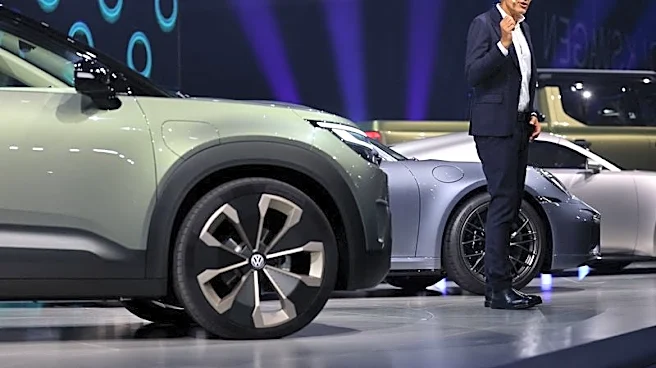
Volkswagen CEO Oliver Blume has issued a stark warning, stating that the company is in a 'more than critical' state. This declaration comes as the German automotive industry faces its 'biggest upheaval in history,' driven by global economic headwinds
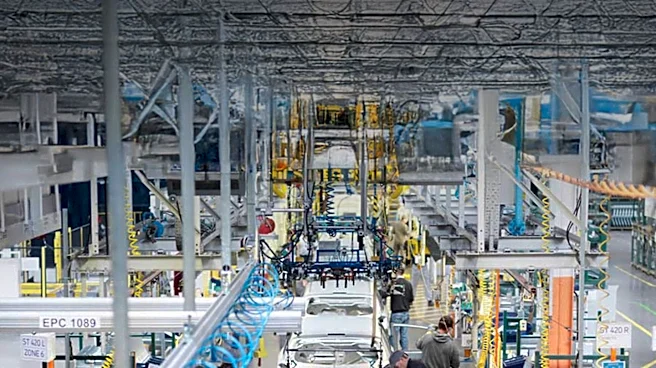
and intense competition from Chinese manufacturers. Blume is scheduled to meet with employees at Volkswagen's headquarters in Wolfsburg and other sites, including Zwickau and Emden, to discuss the company's proposed savings plans. These plans reportedly include significant job cuts, with 50,000 positions already targeted and agreements reached with 37,000 employees. The company is also grappling with an overproduction of 500,000 vehicles annually in Europe. While no final decisions have been made regarding plant closures, Blume indicated that some facilities, such as those in Emden, Hannover, Zwickau, and Neckarsulm, may not remain profitable into the 2030s. He emphasized that closing factories would be a last resort, and Volkswagen is exploring alternative industrial uses for affected sites, including discussions with defense industry companies for its Osnabrueck factory.
Why It's Important?
This situation at Volkswagen highlights the profound challenges confronting the global automotive industry, particularly in established markets like Germany. The pressure from Chinese competition and broader economic shifts signals a significant restructuring period for major car manufacturers. For the U.S. automotive market, this could mean increased competition from foreign brands, potential shifts in global supply chains, and a renewed focus on efficiency and innovation. The potential job cuts and plant closures at Volkswagen could also serve as a bellwether for other large industrial companies facing similar pressures, potentially impacting employment and economic stability in regions heavily reliant on manufacturing. The exploration of alternative industrial uses for factory sites demonstrates a strategic pivot that could influence how other companies adapt to changing market dynamics, potentially fostering new industries or partnerships in manufacturing hubs.
What's Next?
In the coming days, Volkswagen CEO Oliver Blume will engage with employees to outline the company's plans and seek their support for the proposed savings measures. The head of the IG Metall union, Christiane Benner, has already voiced strong criticism of management's proposals and pledged to resist any factory closures, indicating potential labor disputes. The supervisory board, which includes representatives from the Lower Saxony state government—a major shareholder—will continue to deliberate on the savings plans. The outcome of these discussions will determine the extent of job cuts, the future of specific manufacturing plants, and the overall strategic direction of Volkswagen. The company's efforts to find alternative industrial uses for its facilities, such as partnering with the defense industry, will also be closely watched as a potential model for industrial adaptation.
Beyond the Headlines
The crisis at Volkswagen extends beyond immediate financial concerns, touching upon the broader societal and economic implications of industrial transformation. The potential job losses and factory closures raise questions about the future of traditional manufacturing employment and the need for robust retraining and support systems for affected workers. The shift in global automotive power, particularly with the rise of Chinese competitors, underscores a fundamental change in the economic landscape, challenging long-held assumptions about industrial leadership. Furthermore, the union's strong opposition highlights the ongoing tension between corporate efficiency drives and worker protections, a dynamic that will likely play out across various industries facing similar pressures. The exploration of alternative uses for manufacturing sites also points to a potential paradigm shift in industrial policy, where adaptability and diversification become crucial for regional economic resilience.