


What's Happening?
Sean Baker, known for his directorial works like "Tangerine" and "The Florida Project," has served as co-screenwriter, editor, and producer for the 2025 film "Left-Handed Girl." This U.S.-Taiwanese co-production, also involving France and the United Kingdom,
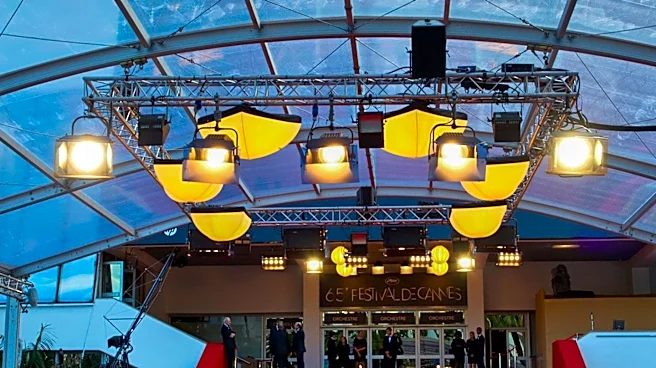
marks the solo directorial debut of Shih-Ching Tsou, Baker's long-time collaborator. The film, shot entirely on an iPhone, is set in Taipei's Tonghua Street Night Market and tells the story of a mother running a noodle stall and her two daughters, unraveling family secrets centered around a five-year-old's left hand, which her grandfather calls the 'devil's hand.' The narrative explores themes of poverty, debt, teenage motherhood, and family lies, culminating in a dramatic revelation at a 60th birthday banquet. The film has garnered international recognition, including being screened at the 2025 Cannes Film Festival's Critics' Week and making the 15-film shortlist for the Academy Award for Best International Feature Film.
Why It's Important?
Sean Baker's involvement in "Left-Handed Girl" highlights a significant collaboration between U.S. and international filmmaking talent, particularly in independent cinema. His role as co-writer, editor, and producer brings his distinctive style—often characterized by raw, authentic portrayals of marginalized lives and innovative filmmaking techniques like iPhone cinematography—to a global audience. This project underscores the increasing trend of international co-productions, allowing for diverse storytelling and broader distribution. The film's exploration of universal themes such as family secrets, societal pressures, and the impact of cultural superstitions on individuals, particularly children, resonates beyond its Taiwanese setting. For U.S. audiences, it offers a window into different cultural narratives and filmmaking approaches, potentially influencing future independent film projects and fostering cross-cultural artistic exchange. The film's success in international festivals and its acquisition by Netflix for streaming in many countries, including the U.S., further solidifies its importance in the global film landscape.
What's Next?
Following its international festival circuit and critical acclaim, "Left-Handed Girl" has been acquired by Netflix for streaming in numerous countries, including the United States. This widespread distribution will make the film accessible to a broad audience, potentially sparking further discussion and analysis of its themes and filmmaking techniques. The collaboration between Sean Baker and Shih-Ching Tsou, who previously co-directed "Take Out" in 2004 and have worked together on Baker's other films, suggests a continued partnership that could lead to future projects blending their creative visions. The film's impact on independent cinema, particularly its use of an iPhone for shooting, may inspire other filmmakers to explore similar cost-effective and authentic production methods. Its success in awards circuits could also elevate the profiles of its cast and crew, opening doors for more international collaborations and diverse storytelling in the U.S. film industry.
Beyond the Headlines
The film's central motif of the 'devil's hand' and the grandfather's superstition delves into deeper cultural and psychological implications. It highlights how deeply ingrained beliefs, even seemingly innocuous ones, can affect a child's self-perception and behavior. The narrative also subtly critiques societal pressures and the burden of 'saving face,' particularly within family structures, which can lead to long-held secrets and emotional suppression. The choice to shoot the film entirely on an iPhone not only demonstrates a practical approach to independent filmmaking but also contributes to the film's raw, intimate aesthetic, immersing the viewer in the bustling, often chaotic, environment of the night market from a child's perspective. This technique blurs the lines between documentary and fiction, enhancing the film's authenticity. The story's exploration of a young mother's struggle and the sacrifices made within a family, even if misguided, offers a nuanced look at love, responsibility, and the complex dynamics of intergenerational relationships, prompting reflection on similar unspoken truths in various cultural contexts.