


What's Happening?
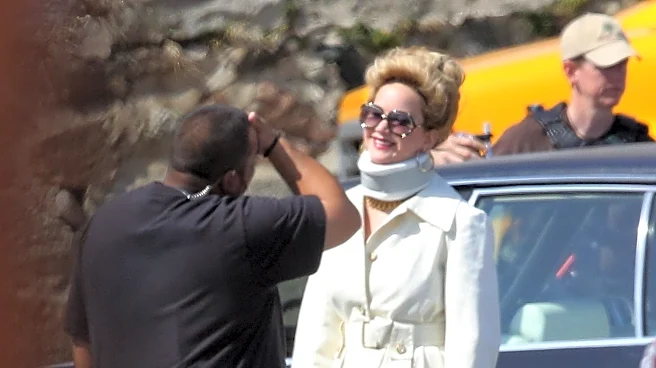
Jennifer Lawrence faced initial rejections for her breakthrough role in the 2010 film 'Winter's Bone' because casting directors deemed her 'too pretty' to portray a character struggling with poverty. Despite being turned down twice in Los Angeles, Lawrence was
determined to secure the part. She traveled to New York and insisted on another audition, where she presented herself without makeup to better fit the character's appearance. This persistent effort ultimately led to her being cast as Ree Dolly. Her performance in the independent drama garnered critical acclaim and earned her first Academy Award nomination for Best Actress. This role marked a significant turning point in her career, paving the way for subsequent major roles in franchises like 'X-Men' and 'The Hunger Games', and an Oscar win for 'Silver Linings Playbook'.
Why It's Important?
This event highlights the often-unconventional and sometimes superficial criteria within the Hollywood casting process, where an actor's physical appearance can be both an asset and a perceived hindrance. Lawrence's experience underscores the challenges actors face in breaking stereotypes and proving their versatility beyond initial impressions. Her determination to alter her appearance for an audition demonstrates a commitment to character authenticity, which ultimately paid off with critical recognition. This story also serves as an example of how independent films can provide significant opportunities for actors to showcase their talent and achieve mainstream success, often by taking on roles that challenge conventional beauty standards or commercial expectations. It reinforces the idea that perseverance and a strong belief in a role can overcome initial industry skepticism.
What's Next?
While this specific event is historical, its implications continue to resonate in Lawrence's career trajectory and the broader film industry. Her early success in a gritty, character-driven role established her as a serious actress capable of diverse performances, influencing the types of roles she has pursued since. For aspiring actors, her story serves as an enduring example of resilience and the importance of fighting for roles that resonate with them, even when facing initial rejection based on superficial reasons. The industry may continue to grapple with its own biases regarding appearance, but Lawrence's journey illustrates that talent and determination can ultimately prevail, shaping perceptions of what makes a leading actor.
Beyond the Headlines
Lawrence's initial rejection for being 'too pretty' touches upon deeper societal and industry perceptions of beauty and authenticity in storytelling. It raises questions about whether actors are sometimes pigeonholed by their looks and the pressure to conform to specific aesthetic ideals for certain roles. The incident also highlights the subjective nature of casting and how a director's vision for a character can sometimes clash with an actor's natural appearance. Furthermore, it subtly critiques the notion that 'pretty' actors cannot convincingly portray characters experiencing hardship, suggesting a bias that can limit creative casting choices. Her success in 'Winter's Bone' ultimately challenged these preconceptions, demonstrating that an actor's ability to transform and embody a character transcends superficial attributes, contributing to a broader conversation about representation and realism in cinema.