





What's Happening?
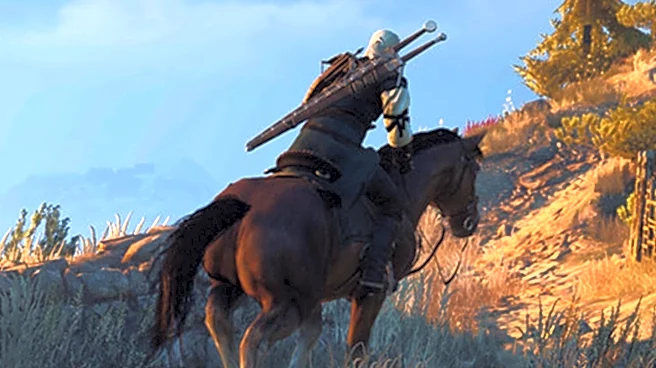
CD Projekt Red, the developer behind 'The Witcher' series, has reiterated its commitment to predominantly using human talent for game development, including the upcoming 'The Witcher 4.' Joint CEO Michał Nowakowski addressed questions regarding the role
of generative AI in game creation during an earnings conference. Nowakowski emphasized that while AI tools are being experimented with, they are not a central or vital component of the studio's development process. He stated that the company's plan is to continue making games primarily with people, rather than relying on AI to create complete games. This stance reflects a broader industry sentiment where AI is often seen as a supplementary tool for mundane tasks, such as resizing assets or user preference analysis, rather than a replacement for creative human input.
Why It's Important?
CD Projekt Red's position highlights a significant debate within the U.S. and global gaming industry regarding the integration of artificial intelligence. The company's emphasis on human craftsmanship for complex games like 'The Witcher 4' underscores concerns about the quality, ethics, and legal implications of AI-generated content. This approach could reassure consumers and creative professionals who fear that an over-reliance on AI might lead to a decline in artistic integrity and job displacement. For the U.S. gaming market, this commitment could influence consumer perception and purchasing decisions, as players often value the human element and unique storytelling in games. Furthermore, the mention of 'anti-AI clauses' becoming standard in publishing contracts suggests a growing legal and contractual framework to protect intellectual property and creative control in an era of evolving AI capabilities, impacting how developers and publishers negotiate future projects.
What's Next?
CD Projekt Red is expected to continue its current development strategy for 'The Witcher 4' and future projects, focusing on human creativity while selectively exploring AI as a supportive tool. This approach may set a precedent for other major U.S. and international game developers, influencing industry best practices and ethical guidelines for AI integration. The ongoing discussions about AI's role in game development will likely continue, with companies weighing the potential for efficiency gains against concerns about creative quality, intellectual property rights, and labor impact. As AI technology advances, the industry will face continuous pressure to define clear boundaries and ethical frameworks for its use, potentially leading to new industry standards or regulatory considerations regarding AI-generated content and its attribution.
Beyond the Headlines
CD Projekt Red's stance on AI in game development touches upon deeper societal implications concerning the future of creative industries and human labor. Nowakowski's comment about not viewing AI-driven game creation as an 'ethical path' for complex games suggests a philosophical resistance to fully automating creative processes. This perspective resonates with broader anxieties about AI's potential to devalue human artistry and intellectual contributions. The legal aspect, particularly the emergence of 'anti-AI clauses' in contracts, indicates a proactive effort to protect human-generated intellectual property in a landscape where AI-generated content blurs ownership lines. This trend could shape future legal precedents and contractual norms across various creative sectors, emphasizing the importance of human authorship and potentially influencing copyright laws in the digital age.