




What's Happening?
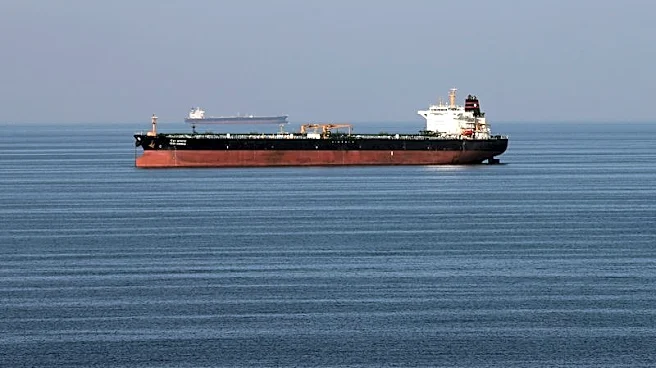
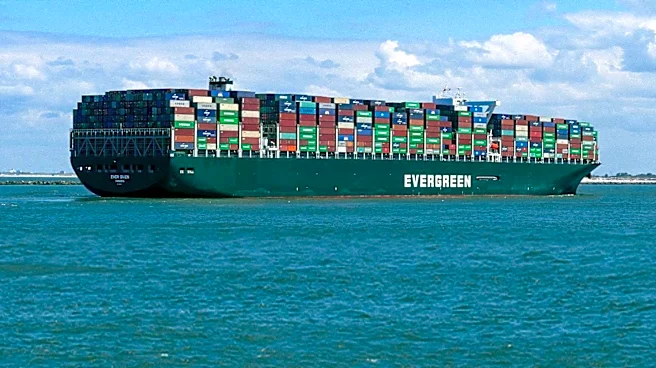
A container ship, the Seaspan Benefactor, has reportedly paid $4 million to secure a slot to bypass the queue at the Panama Canal. This decision comes as wait times surge due to increased traffic driven by the ongoing war in Iran and upcoming weather
concerns. The Panama Canal Authority (ACP) has implemented draft restrictions to conserve water in Gatún Lake, leading to longer wait times for vessels. As of Wednesday, 110 vessels were waiting to traverse the canal, with 78 holding reservations. The Seaspan Benefactor, chartered by Ocean Network Express, is part of a fixed rotation from Asia to the U.S. East Coast. The high bid reflects the importance of maintaining schedules and avoiding delays, which can have cascading effects on global trade.
Why It's Important?
The decision to pay a premium for a transit slot highlights the critical role of the Panama Canal in global trade, especially for container ships that rely on fixed schedules. The congestion and draft restrictions are impacting shipping costs and schedules, with companies like CMA CGM and MSC increasing fees for cargo transiting the canal. This situation underscores the vulnerability of global supply chains to geopolitical events and environmental factors. The canal's operator is adjusting draft levels due to expected below-average rainfall, which could exacerbate the situation. The increased costs and delays could affect U.S. importers and exporters, potentially leading to higher consumer prices and supply chain disruptions.
What's Next?
The Panama Canal Authority plans to further reduce draft levels in the coming weeks, which may lead to additional delays and increased costs for shipping companies. As the El Niño weather pattern develops, the canal could face more severe water shortages, potentially limiting daily transits and affecting larger vessels. Shipping companies and freight forwarders are advising clients to prepare for extended transit times and additional costs. The situation may prompt stakeholders to explore alternative routes or adjust logistics strategies to mitigate the impact of canal congestion.