





What's Happening?
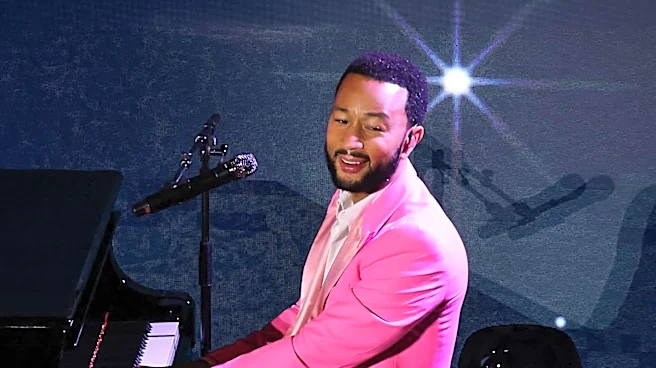
John Legend's 2006 hit song "Save Room" features a sample from Hungarian guitarist Szabó Gábor's recording of "Stormy." The original song "Stormy" was by Classics IV, which Gábor covered. Legend's track utilized Gábor's rendition of the song. This sampling
highlights Gábor's lasting influence on popular music, as his recordings have also been used by other prominent artists like Madonna. Madonna's 1998 album *Ray of Light* included musical elements from Gábor's "Space" in her song "Mer Girl." The use of Gábor's work in "Save Room" was produced by Will.i.am and was the first single from Legend's 2006 album *Once Again*. Gábor spent over a decade and a half in the United States before returning to Hungary in 1974 and 1978, collaborating with various Hungarian musicians.
Why It's Important?
The integration of Szabó Gábor's music into John Legend's "Save Room" underscores the global interconnectedness of musical artistry and the enduring legacy of influential musicians across genres and generations. This practice of sampling not only introduces older works to new audiences but also demonstrates how diverse musical traditions can converge to create contemporary hits. For Gábor, a Hungarian guitarist who spent significant time in the U.S., his continued presence in modern music validates his artistic contributions and broadens his posthumous reach. This trend also highlights the complex legal and creative considerations surrounding music sampling, impacting copyright holders, producers, and artists who seek to innovate by building upon existing musical foundations. The recognition of Gábor's work by artists like Legend and Madonna reinforces his status as a significant figure in music history, influencing the soundscapes of different eras.
Beyond the Headlines
The practice of sampling, as seen with John Legend's use of Szabó Gábor's work, raises broader questions about musical originality, homage, and the evolution of creative expression. While sampling can be a powerful tool for artistic innovation and cross-cultural dialogue, it also sparks debates about intellectual property rights and fair use. The distinction between using musical elements and directly sampling a recorded version, as in Legend's case, highlights the nuances of copyright law in the music industry. This ongoing dialogue shapes how artists create, how music is consumed, and how the legacies of past musicians are preserved and reinterpreted. The continued discovery and integration of older, often lesser-known, works into mainstream music also speaks to a broader cultural appreciation for diverse musical histories and the cyclical nature of artistic influence.