


What's Happening?
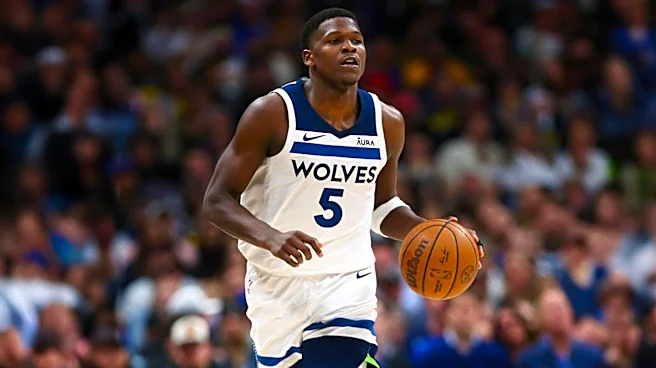
The Minnesota Timberwolves have decided to leave their 15th roster spot open as the NBA season approaches, prioritizing roster flexibility over signing an additional player. Head coach Chris Finch confirmed this decision, stating that the team values
the ability to make roster moves later in the season. This strategy is not new for the Timberwolves, as they previously entered a season with 14 standard contracts, which allowed them to sign Kyle Anderson off the buyout market mid-season. Finch believes the current roster provides sufficient depth and versatility, enabling him to be creative with lineup combinations and extend the rotation. The team's decision also considers 'cap sensitivities,' indicating a financial component to maintaining an open roster spot.
Why It's Important?
This decision by the Timberwolves carries significant implications for their strategic approach to the upcoming season and their long-term roster management. By keeping a roster spot open, the team gains crucial flexibility to address unforeseen needs, such as injuries or performance issues, that may arise during the season. This allows them to be opportunistic in the buyout market or facilitate more complex trades without immediate roster constraints. Financially, it helps manage salary cap implications, providing more maneuverability under the league's collective bargaining agreement. While some might argue for filling the spot with a veteran for immediate depth, the Timberwolves are betting on their current roster's internal growth and versatility, particularly with players like Trey Lyles who can play multiple positions. This approach could either prove prescient by allowing them to acquire a high-value player later or expose them to depth challenges if injuries hit early.
What's Next?
As the season progresses, the Timberwolves will closely monitor their roster's performance and health to determine if and when to fill the open spot. Any significant injuries to key players, particularly in the frontcourt, could prompt them to re-evaluate their stance. The team will also be attentive to the buyout market later in the season, looking for experienced players who could provide a specific skill set or leadership. Coach Finch will likely experiment with various lineup combinations, utilizing the perceived versatility of his current players to cover different roles. The success of this strategy will be judged by the team's ability to navigate the regular season effectively without a full 15-man roster and whether they can capitalize on the flexibility to make impactful additions if necessary. Stakeholders, including fans and analysts, will be watching to see if this calculated risk pays off in terms of on-court success and efficient roster management.
Beyond the Headlines
The Timberwolves' decision to maintain roster flexibility reflects a growing trend in the NBA, where teams are increasingly valuing strategic maneuverability over immediate roster completion. This approach acknowledges the dynamic nature of an NBA season, where unforeseen circumstances often dictate the need for mid-season adjustments. It also highlights a sophisticated understanding of the salary cap and collective bargaining agreement, allowing teams to optimize their financial and personnel resources. Ethically, it raises questions about player security, as fewer guaranteed roster spots could mean fewer opportunities for fringe players. However, from a competitive standpoint, it empowers front offices to be more agile and responsive to team needs, potentially leading to more impactful acquisitions than those made during the initial offseason rush. This strategy could influence how other teams manage their rosters, particularly those with cap constraints or a desire to remain adaptable throughout the long season.