



What's Happening?
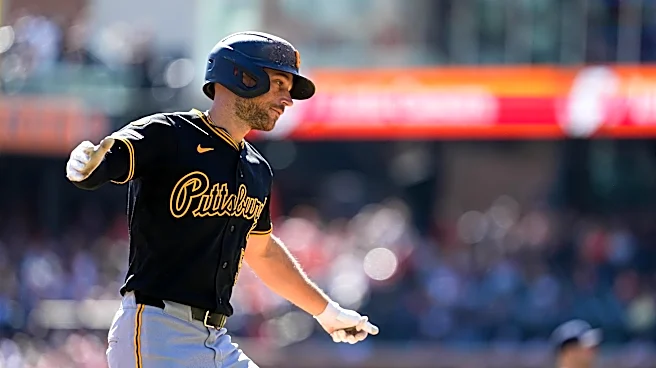
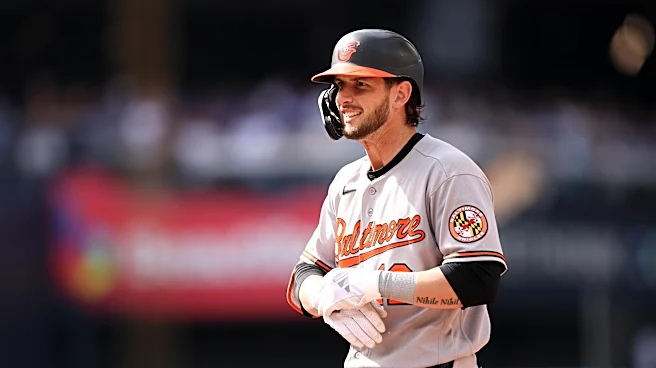
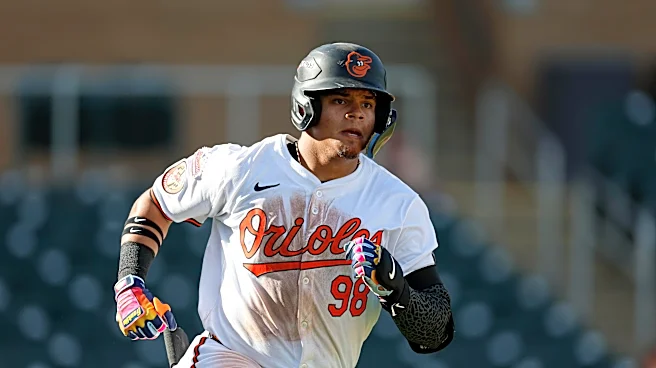
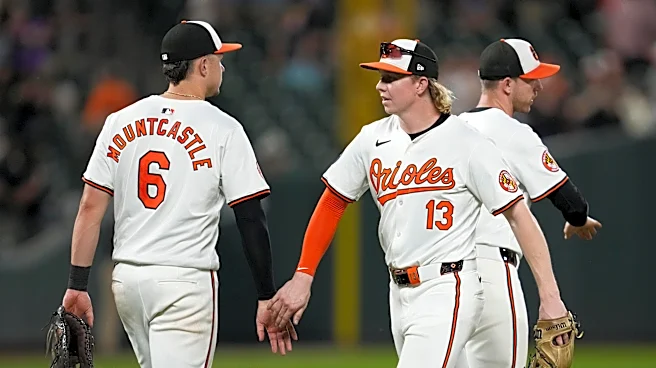
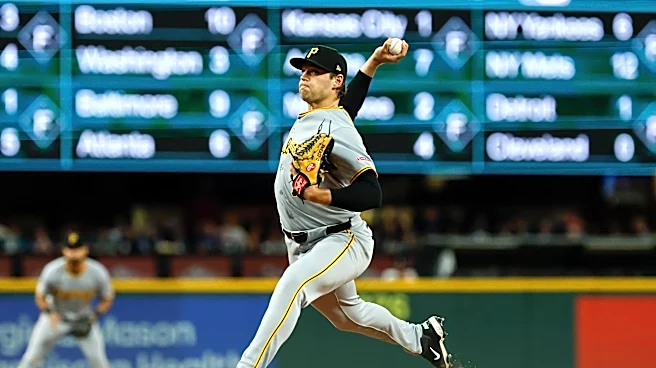
The Pittsburgh Pirates are reportedly considering a trade for Baltimore Orioles third baseman Coby Mayo to address their significant offensive struggles against left-handed pitching. In the 2026 season, the Pirates posted a dismal 18-33 record against left-handed starters,
in stark contrast to their 64-47 record against right-handed starters. Their collective batting average, slugging percentage, and OPS against left-handed pitching were among the worst in the league. Coby Mayo, despite not being the Orioles' top hitter, demonstrated strong performance against southpaws, batting .322/.393/.712 with an OPS of 1.105, including 16 home runs in 147 at-bats. Mayo also plays third base, a position where the Pirates are looking for a more consistent performer, as current players like Nick Gonzales excel offensively but struggle defensively, and Jared Triolo is strong defensively but weak offensively.
Why It's Important?
Acquiring Coby Mayo could significantly bolster the Pittsburgh Pirates' lineup, particularly against left-handed pitching, which was a major weakness in their 2026 season. His proven ability to hit southpaws would provide a much-needed right-handed power bat, balancing the team's offensive attack. Furthermore, Mayo's presence at third base would address a critical positional need, potentially allowing for better defensive alignment or providing a more consistent offensive threat from that position. This move would signal the Pirates' commitment to actively improving their roster and competing more effectively in the National League. The trade would also involve strategic considerations for the Orioles, who have multiple third base prospects and are reportedly open to trading players for pitching and outfield upgrades.
What's Next?
The potential trade for Coby Mayo is a key offseason consideration for the Pittsburgh Pirates. While the Pirates have the assets to make such a trade, the article suggests it is unlikely to occur before the impending lockout on December 1. Mayo has four years of team control, including pre-arbitration in 2027 and arbitration through 2029, making him an attractive long-term asset. However, concerns about his defensive performance at third base (-9 defensive runs saved, -2 outs above average in 2026) would need to be weighed against his offensive potential. The Pirates will need to assess if Mayo's strong second-half hitting (.270/.337/.540 OPS of .877) is sustainable or if he will regress to his first-half form. The team will also explore other third base targets in free agency and trade markets.
Beyond the Headlines
This potential trade highlights the intricate balance teams seek between offensive production and defensive capability, especially at key positions like third base. The Pirates' willingness to consider a player with defensive shortcomings like Mayo, due to his specific offensive strengths against left-handed pitching, underscores the increasing specialization in modern baseball roster construction. The discussion around Mayo's contract control and arbitration eligibility also reflects the value placed on young, cost-controlled talent in MLB. The looming lockout deadline adds urgency and complexity to all offseason transactions, as teams and players navigate an uncertain labor environment. This situation exemplifies how strategic player acquisitions are not just about individual talent but also about addressing specific team weaknesses and managing long-term roster and financial planning.