



What's Happening?
A new study by Recurrent, a Seattle-based clean tech and software company, has found that electric vehicles (EVs) on average retain 78% of their range at 32 degrees Fahrenheit. This research, based on telematics data from over 59,000 enrolled EVs across
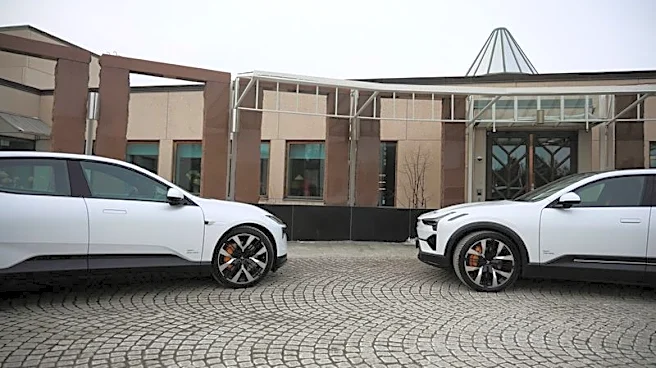
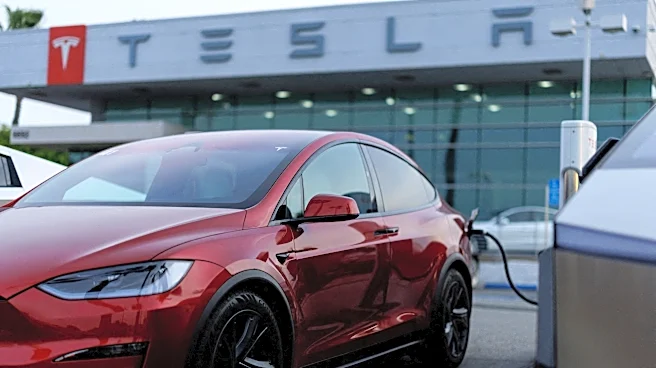
43 models, aims to debunk the common misconception that EVs lose nearly all their charge in cold temperatures. The study highlights that while some range loss occurs, it is not as drastic as often perceived. Polestar emerged as the top-performing brand, with the Polestar 2 retaining 88% of its range at 32F. Tesla averaged 85% across five models, with the Model S with a heat pump achieving 90%. Conversely, the Toyota bZ4X showed the lowest retention at 70%, followed by the Mercedes EQS (71%) and EQS SUV (73%), and the Chevrolet Blazer EV (72%). The study also noted that heat pumps can add up to 8% more range at 32F, though this advantage diminishes as temperatures drop further.
Why It's Important?
This study is important for the U.S. automotive industry and consumers as it provides data-driven insights to counter a significant barrier to EV adoption: range anxiety in cold weather. By clarifying the actual impact of cold temperatures on EV range, Recurrent's findings can help build consumer confidence and inform purchasing decisions. For automakers, the data highlights the performance differences between models and the effectiveness of features like heat pumps, which can drive innovation and competitive advantages. The U.S. market, with its diverse climates, needs reliable information on EV performance in various conditions. This research can influence public perception, potentially accelerating the transition to electric vehicles and supporting national goals for reduced emissions and energy independence. It also provides valuable information for policymakers considering incentives or infrastructure development for EVs in colder regions.
What's Next?
Recurrent plans to continue expanding its database, with 10 new models added this year and nine more, including the Rivian R2 and Hyundai Ioniq 9, to be included once sufficient cold-weather data is collected in January. This ongoing research will provide a more comprehensive understanding of EV performance across a wider range of vehicles. Automakers are likely to leverage these findings to improve battery technology, thermal management systems, and integrate more efficient heat pumps into their EV designs. Consumers can expect more transparent information regarding cold-weather range, potentially influencing marketing strategies. The data also informs the development of charging infrastructure, particularly for long-distance travel in cold climates, as EV owners may need to factor in additional charging stops during winter road trips. The industry will continue to address and mitigate cold-weather performance challenges to enhance the overall EV ownership experience.
Beyond the Headlines
Beyond the technical aspects of EV range, this study touches upon the broader societal challenge of overcoming misinformation and preconceived notions in the adoption of new technologies. The 'myth' about EVs losing all charge in the cold reflects a common human tendency to resist change and amplify perceived drawbacks. The rigorous data collection and analysis by Recurrent serve as a model for evidence-based communication, crucial for fostering public trust and informed decision-making. Ethically, it underscores the responsibility of researchers and media to provide accurate information to guide public discourse on critical issues like climate change and sustainable transportation. Culturally, as EVs become more prevalent, understanding their real-world performance in all conditions will be essential for their seamless integration into daily life, challenging existing norms and expectations about vehicle ownership and travel.