







What's Happening?
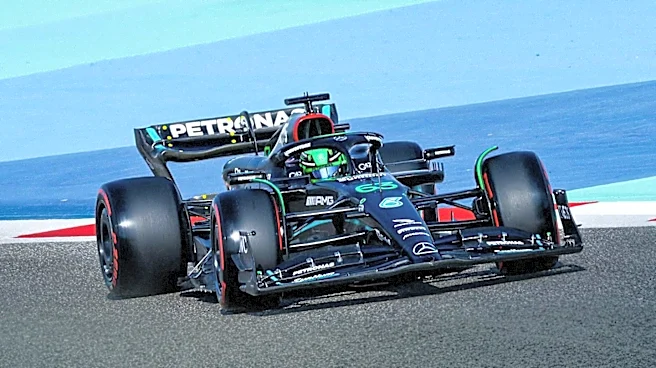
Mercedes driver George Russell has expressed concerns regarding the inconsistent performance of his car following the team's latest upgrade package. Russell noted a significant fluctuation in his results, stating he has never experienced such a volatile
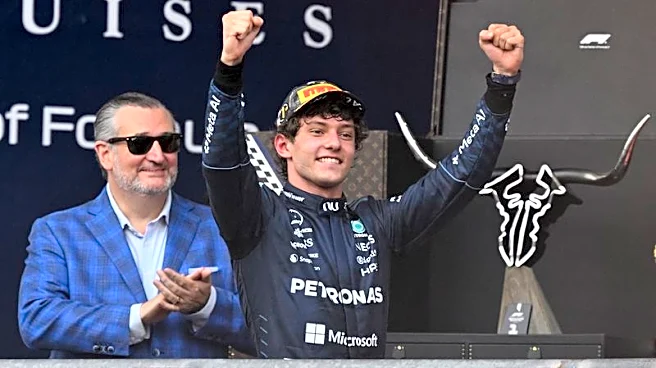
season in his career. He struggled at the US Grand Prix in Austin, finishing eighth after starting sixth, while his teammate Kimi Antonelli delivered a much stronger performance, winning the race. Russell believes the car operates within a very narrow performance window, making it challenging to achieve consistent results across different conditions. Mercedes team principal Toto Wolff acknowledged the issue, indicating that Russell faces more difficulties when the car operates outside its ideal window, though he maintains confidence in Russell's abilities.
Why It's Important?
This inconsistency in performance for Mercedes, particularly with a key driver like George Russell, has significant implications for the team's competitive standing in Formula 1. The inability to consistently extract optimal performance from their upgraded car suggests underlying technical challenges that need urgent resolution. This situation could affect Mercedes' position in the constructors' championship and impact driver morale. For the broader sport, it highlights the complexities of modern F1 car development, where even minor upgrades can introduce unforeseen variables that affect driver performance differently. The disparity between teammates also puts pressure on the engineering team to understand and rectify the car's behavior, ensuring both drivers can maximize its potential under varying race conditions.
What's Next?
Mercedes' immediate next steps will involve a thorough analysis of the data collected from recent races, particularly focusing on the US Grand Prix, to understand why the upgrade package is yielding inconsistent results between drivers and under different conditions. The team will likely work closely with both George Russell and Kimi Antonelli to gather their feedback and identify specific setup adjustments or car modifications that can broaden the performance window. Engineers will be tasked with pinpointing the exact factors contributing to the volatility, whether it's related to aerodynamics, suspension, or tire management. The goal will be to implement solutions that allow both drivers to consistently extract maximum performance from the car in upcoming races, aiming for improved reliability and competitiveness.
Beyond the Headlines
The challenges faced by Mercedes with their latest upgrades underscore the razor-thin margins of performance in elite motorsport. This situation highlights the intricate relationship between car design, driver feedback, and track conditions, where even a technically superior component can introduce unforeseen complexities. It also brings into focus the psychological aspect of racing, as inconsistent performance can affect a driver's confidence and approach. The team's ability to diagnose and rectify these issues will be a testament to their engineering prowess and adaptability. Furthermore, this scenario provides a compelling narrative within the sport, showcasing the constant battle for perfection and the dynamic nature of competition, where even top teams can encounter unexpected hurdles in their pursuit of victory.