







What's Happening?
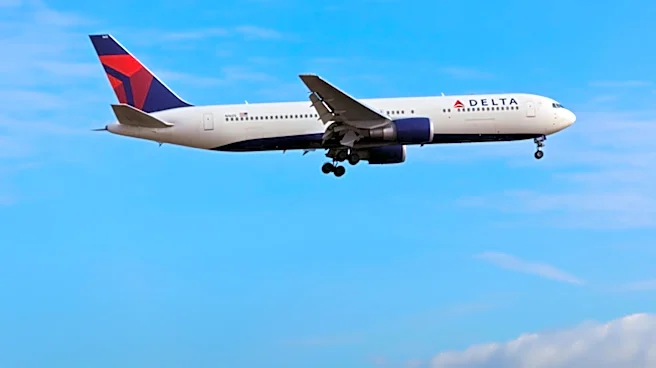
Delta Air Lines has completed a new sustainable aviation fuel (SAF) blending facility at the Flint Hills Resources Pine Bend Refinery in Minnesota. This development is expected to enhance access to cleaner aviation fuel at the Minneapolis-St. Paul International
Airport, Delta's second-largest hub. The facility, a collaboration with the Minnesota SAF Hub and supported by various stakeholders, will blend up to 30 million gallons of neat SAF annually. This initiative is part of Delta's broader strategy to reduce carbon emissions and promote sustainable aviation practices.
Why It's Important?
The completion of the SAF blending facility marks a significant step in the aviation industry's efforts to reduce greenhouse gas emissions. Sustainable aviation fuel is seen as a key solution for lowering carbon emissions, and Delta's investment in this facility underscores its commitment to environmental sustainability. The project also highlights the importance of public-private partnerships in advancing clean energy technologies. As airlines face increasing pressure to address climate change, initiatives like this are crucial for meeting long-term decarbonization goals and ensuring the industry's future viability.
What's Next?
Delta plans to continue its efforts to increase SAF adoption across its network, with a target of replacing 10% of its conventional jet fuel consumption with SAF by 2030. The airline's collaboration with Shell Aviation aims to expand SAF availability at major U.S. hubs. The success of the Minnesota facility could serve as a model for similar projects nationwide, potentially accelerating the transition to sustainable aviation fuels. Ongoing investments in refining capacity and supply chain infrastructure will be essential to meet the growing demand for SAF and achieve broader environmental objectives.